Tuesday, April 19, 2022

A Very Busy Bush!

Since the ground is covered in snow this morning, I wanted to post some proof that spring is on the way. These pictures were taken on April 11th in our yard.
Hundreds of pollinators were on our Boxwood Bush. It was in bloom and the green flowers were easy to miss, however the fragrance of the flowers attracted many insects. The above insect may look like a bee, but is one of the "Flower Flies". They can mimic bees, thus avoiding unwanted attention from predators and people.

Narrow-headed Marsh Fly

A member of the Blow Flies family.

Confusing Furrow Bee (I think)

Western Honey Bee: Notice the yellow pollen basket on the leg.

Hovering Western Honey Bee (pollen basket on each leg)

Asian Lady Beetle 

I saw a minimum of 6 species on the bush in 30 minutes! One out of every 3 bites of food we eat exists because of the efforts of pollinators, including many fruits, vegetables and seeds! At least 75% of flowering plants on the earth are pollinated by insects and animals. This is equivalent to more than 1,200 crops and 180,000 different types of plants. These plants in turn help to stabilize soil, clean the air, supply oxygen and support wildlife! (https://www.nps.gov/subjects/pollinators/what-is-a-pollinator.htm)

Sunday, April 17, 2022

 Big and Small Winged Things!

The "resident" Red-tailed Hawk continues to be tolerant of people. I was watching some Golden-crowned Kinglets high in a tree when I realized this fellow was just above my head. They are the second largest member of the Buteo genus of hawks. (broad, rounded, wings and short, wide tail) Cornell Lab, All About Birds

We continue to see Sandhill Cranes flying overhead. These 3 were headed toward Michigan when Deryl snapped this photo.

The iridescent colours of the Common Grackle shine at Sarnia Bay.

A Brown Creeper probes into crevices and picks at loose bark with their slender, downcurved bills, looking for insects to eat. They are sparrow-sized, or smaller. Cornell Lab, All About Birds.

Can you see the Brown Creeper on the tree bark? They can be a difficult bird to find at times!

Canada Geese and Mallards continue to make me laugh. I see them in the strangest places. Perhaps these two are "smarter representatives" of their species and realize there is safety in trees?

Wednesday, April 13, 2022

Kinglets and a Bittern!

Golden-crowned Kinglets are currently migrating through the area and I had a close encounter with a couple of these birds this morning. When excited, they will flash their orange crowns, raising their feathers above the head.

These tiny songbirds generally stay high in conifer trees searching for insects to eat. On cold days they can be found closer to the forest floor.

Ruby-crowned Kinglets have recently been showing up locally. A group of kinglets has many collective nouns, include a "Castle, Court, Princedom and Dynasty" of Kinglets. Very regal names for such a tiny species.!! 
(https://identify.whatbird.com/obj/756overview/Golden-crowned_kinglet.aspx)

Can you see the incredibly well-camouflaged American Bittern hiding in the reeds?
(Click on photo to enlarge it.)

Deryl photographed an American Bittern standing in the phragmites. They adopt a classic pose when alarmed, with the beak pointing straight up, helping this streaky bird blend in with its reedy background. (Cornell Lab, All About Birds) 

We found a partially exposed American Bittern near Rainy River in 2018. They can be found along freshwater marshes, but as you can see by the camouflage, can be very difficult to find! They are heard more often than seen. Their booming, clacking, gulping calls have earned them some colourful nicknames including, "stake-driver", "thunder-pumper," "water-belcher," and "mire-drum." (Cornell Lab, All About Birds)

Sunday, April 10, 2022

 4 Legs, No Wings!

We headed into Canatara this afternoon in hopes of finding some butterflies. It was during the pursuit of an uncooperative Eastern Comma when Deryl spotted a Long-tailed Weasel! This species has a tail which is longer than half its body length, with a black tip.

If he hadn't been trying to cross the path on which we were standing, we probably wouldn't have had a chance to photograph the little guy.

They live in abandoned burrows of other animals, rotting logs or under tree roots and rocks. They are most active at night but will come out in the day. The Long-tailed weasel can climb trees and is a good swimmer.  
(https://nhpbs.org/natureworks/longtailedweasel.htm)

Long-tailed Weasels are carnivores with a high rate of metabolism. They consume about 40% of their body weight every day!  Mice, voles, rabbits, chipmunks, insects and the occasional bird are included in the diet. It's long, thin body makes it easy to follow prey into underground burrows. (https://nhpbs.org/natureworks/longtailedweasel.htm)

Tuesday, April 5, 2022

 A Visit to Henderson C.A.

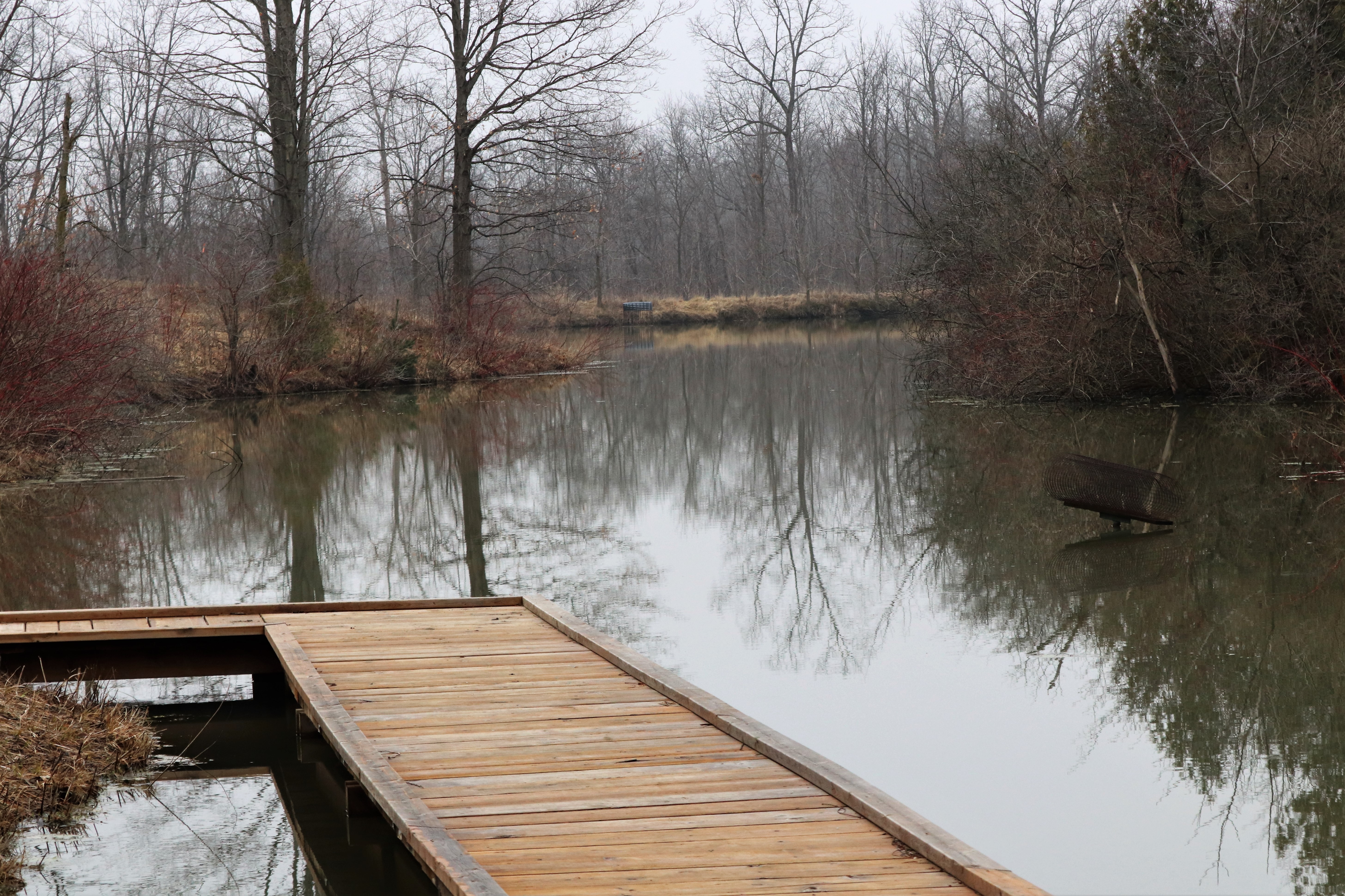
The sun didn't peak out from behind the clouds as early as expected today, but I still decided to head to Henderson Conservation Area near Petrolia. This dock was installed for school children to access the pond just prior to Covid. There a been a few field trips in the past 2 years, but hopefully it will soon get more use!

My Black-capped Chickadee friends didn't disappoint! I like to think they remembered me. LOL! (I'm sure they were just hungry.)

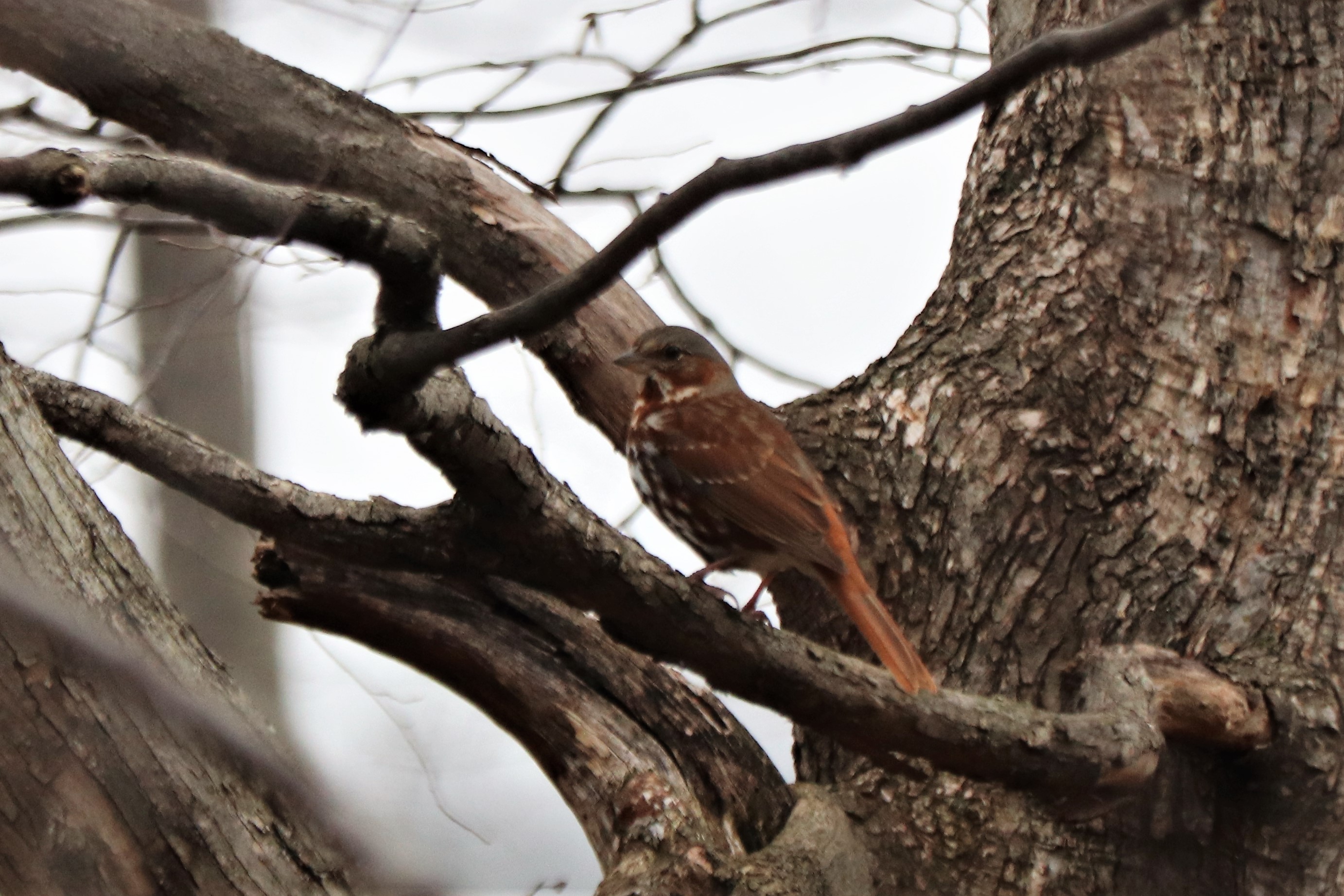
                                    Eastern Towhee                              Fox Sparrow
The 2 species above have been difficult for me to find this spring. I was happy to finally see both of them today!

When the sun shone, I found a Northern Leopard Frog camouflaged in the pond.

The trails continue to see improvement. It was good to see more boardwalk installed above some of the muddier sections of trail! (Boots are definitely required at this time of year.)

I saw my first Mourning Cloak butterfly today, exactly where I hoped to find one! They overwinter as adults in tree crevices, log piles and other sheltered places and are one of the first species we see in the spring when the temperatures begin to rise.

This is one of the Sphagnum Mosses. First Nations women used moss as diapers for their babies. It is very absorbent and would be dried in the sun before use. When it was "full" it would be discarded and decompose back into soil.

Several species were accessing the food that someone had left on a stump for the birds. Red-breasted Nuthatches move quickly over trunks and branches, probing for food in crevices and under flakes of bark. They creep up, down, and sideways without regard for which way is up, and they don't lean against their tail the way woodpeckers do! (Cornell Lab, All About Birds)

Sunday, April 3, 2022

 Early April:

Recent strong winds have resulted in aerial activity for many species including Turkey Vultures. I watched at least 50 sail over Canatara Park over the course of an hour earlier this week They are majestic, but unsteady soarers. Their teetering flight with wings raised in a 'V' is characteristic. (Cornell Lab, All About Birds)

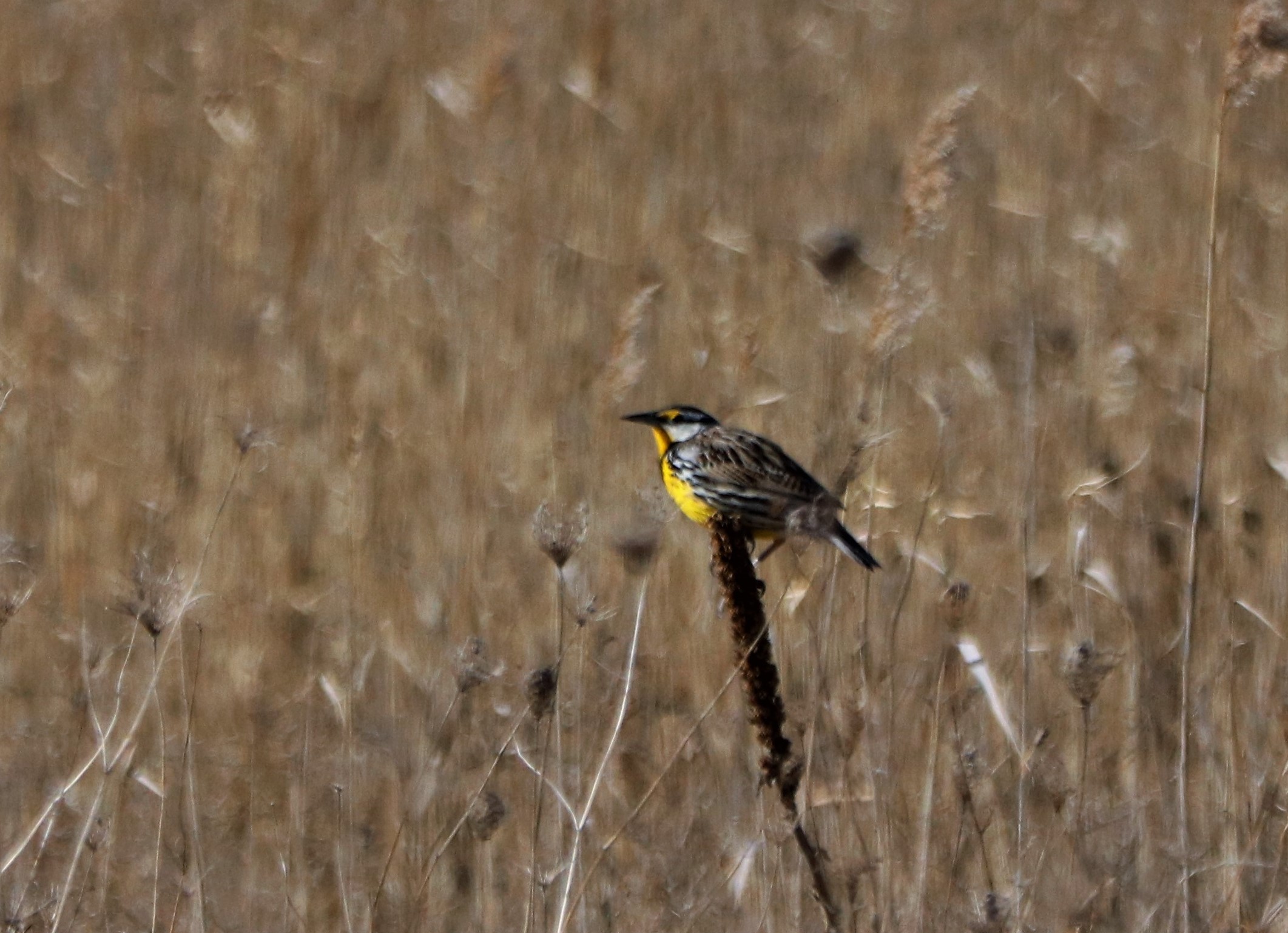
We found a couple of Eastern Meadowlarks at the Sarnia Landfill on Saturday. 
These ground nesters are not actually members of the lark family, but belong to the blackbird family, which also includes cowbirds and orioles. (Cornell Lab, All About Birds) 

                                        Owl Pellet                                 Pellet bones
I found an owl pellet on the ground in an open field which was probably coughed up by a Short-eared Owl. Scientists can learn about the diet of owls by identifying the bones inside pellets. Owls will cough up undigestible bones and fur/feathers into compact pellets. I haven't dissected a pellet in a very long time so decided to see what was inside. Based upon the small size and the orange rodent teeth, I assume they were the skeletal remains of a shrew.


Red-winged Blackbird males will do everything they can to get noticed, sitting on high perches and belting out the 'conk-la-ree' song all day long. Females stay lower, skulking through vegetation for food and quietly weaving together their remarkable nests. (Cornell Lab, All About Birds.)

A recent walk along the Canatara Beach coincided with some nice lighting conditions!

Friday, April 1, 2022

 April Fools Day!

Not sure if this Canada Goose knew it was April Fool's Day and was was trying to fool us into believing she was sitting on eggs. Perhaps she really was nesting but this old willow trunk in Canatara Park seems an odd location to be nesting!

The Easter Bunny made an early appearance this morning! 

An over-wintering Hermit Thrush feasted on Sumac berries this morning. Its nice to see at least one of them survived the winter!

We had a surprise when an early Yellow-rumped Warbler showed up at our backyard bird feeder yesterday on March 31st! They are generally the earliest species of warbler to return during spring migration. Since they will eat berries in addition to insects, they can survive in the cold Ontario spring weather.