Friday, July 7, 2023

 Back in Ontario!

We had a very enjoyable trip! 12 days, covering 5,300 km! Lots of cool sightings! Great weather and very little wild fire smoke to deal with!

We took stretch breaks along the route. After crossing back into Ontario, a White Admiral greeted us at the car following a short walk to a wetland.

We spent two nights at my brother's giving us a chance to explore Lake Superior both by motor boat and Canoe! 

The rocky shoreline of Lake Superior was spectacular, despite the grey skies.

A walk along the rural backroad provided views of many dragonflies, including American Emerald.

Hudsonian Whiteface (a lifer)

Prior to leaving home on June 6th, I had only seen one Monarch butterfly. This individual managed to fly all the way to the north shore of Lake Superior by June 15th!

Wild Lupine was in bloom along many roadsides.

Ruby-throated Hummingbird waiting for it's turn at the feeder.

One of 2 feeders at my brother's place where the hummingbirds were willing to share space! 

Thursday, July 6, 2023

 Miscellaneous Western Pics!

View from our lunch stop in Golden, British Columbia.

Swainson's Hawk, near Frank Lake, AB

Mural on wall in Milo, Alberta

Foot hills, east of Calgary near the Bow River

Pronghorn Antelope, near the Trans Canada Hwy, Saskatchewan

Back in 1937, Yellow Grass, Saskatchewan reached 114 degrees Fahrenheit (45 degrees Celsius) and was recognized as the hottest spot in Canada. I don't know if that record has been broken.

We hoped to photograph a "Little House on the Prairie". After pulling over to the side of the road, we noticed a bird on the post.

A Wilson's Snipe sat and called, probably to it's young in the nearby ditch.

Abandoned tractor in a field.

Sneaking up on a Common Raven, outside Banff.

Tuesday, July 4, 2023

 Frank Lake, Alberta: continued!

Visiting Frank Lake during breeding season provided opportunities to view many wild birds. We only stayed for 2 hours, but found 42 species on June 10th!

American Coot chicks are an example of precocial young. They are able to leave the nest and follow their parents into the water almost immediately after hatching. We saw a few families with fuzzy chicks at Frank Lake!
https://academy.allaboutbirds.org/american-coot-chicks/

A viewing blind and boardwalk provided easy viewing access to some of the species.

Eared Grebe

Ruddy Duck

Gadwall

Cinnamon Teal

Wilson's Phalarope

Yellow-head Blackbird gathering food to take back to the nest.

Another Yellow-headed Blackbird didn't mind sharing the boardwalk as we walked by.

Monday, July 3, 2023

 Larger Birds at Frank Lake, Alberta

Frank Lake, located 50 km south-east of Calgary, is a productive wetland important to hundreds of birds species. Once completely dry, this wetland has been saved from drainage and drought through a partnership between industry, government and Ducks Unlimited.
https://www.ducks.ca/places/alberta/frank-lake/

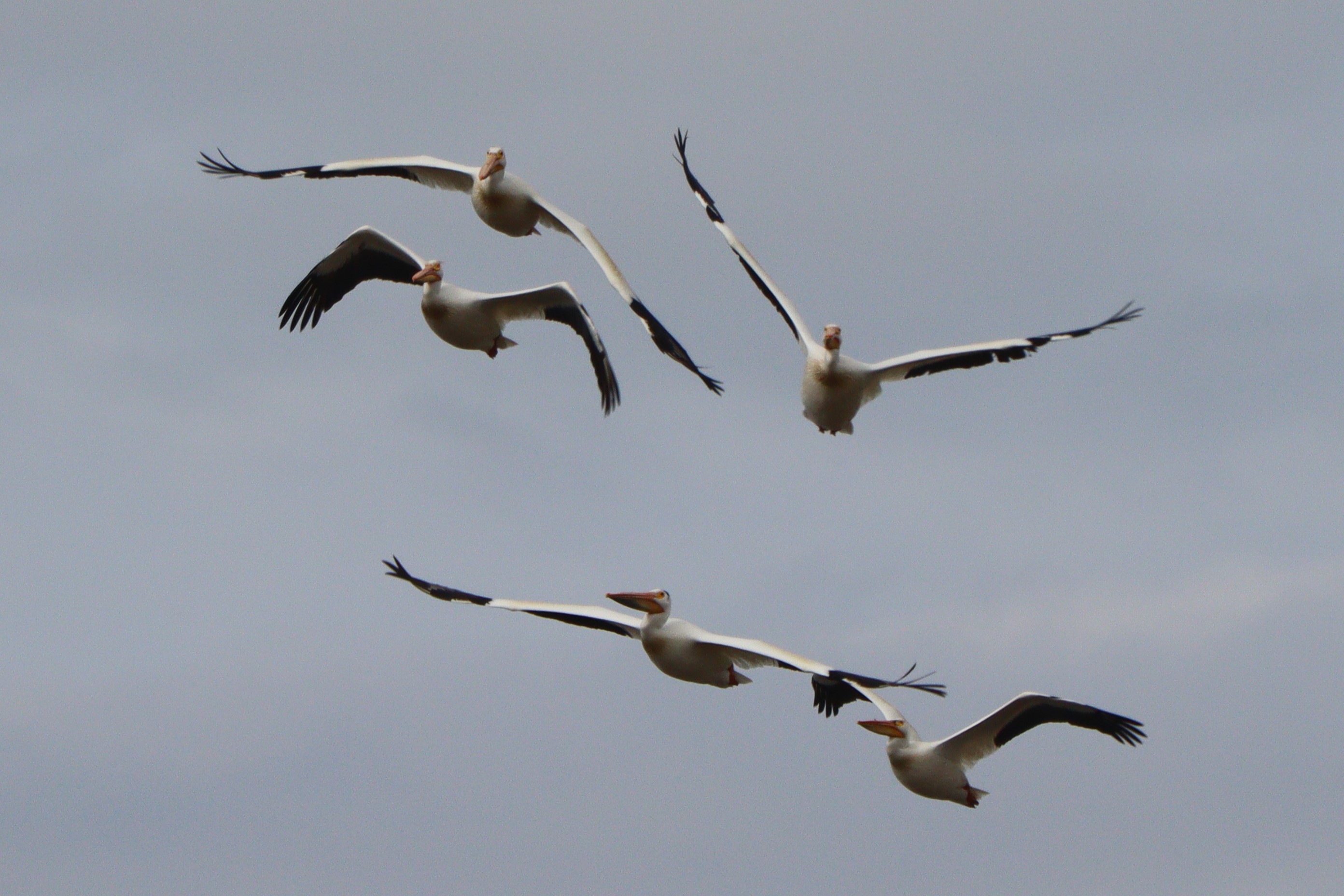
Approximately 125 American White Pelicans put on a show for us as they circled and landed nearby. These Pelicans will cooperate when feeding. Sometimes, large groups gather in wetlands. They coordinate their swimming to drive schooling fish toward the shallows where they can be corralled easily and scooped from the water. I found it interesting to learn that American White Pelican embryos squawk before hatching to express discomfort if conditions get too hot or cold! 
https://www.allaboutbirds.org/guide/American_White_Pelican/overview

We found a total of 7 Marbled Godwit at Frank Lake. They breed in shortgrass prairies near wetlands and will avoid areas with taller vegetation. The body is about the size of an American Crow, with a very long bill. Aquatic invertebrates, earthworms, insects, aquatic plant tubers, leeches and small fish are some of their favoured foods. They will probe soft mud and sand with their long bill, often entirely submerging the head. 
https://www.allaboutbirds.org/guide/Marbled_Godwit/lifehistory

Black-necked Stilts have the second-longest legs in proportion to their bodies of any bird, exceeded only by flamingos!  They sometimes participate in a "popcorn display" which involves a group of birds gathering around a ground predator and jumping, hopping, or flapping to drive it away from their nests!
https://www.allaboutbirds.org/guide/Black-necked_Stilt/id

Marbled Godwit and Black-necked Stilt for size comparison.

American Avocet hunting for food. Their diet consists of beetles, water boatmen, midges, brine flies, fairy shrimp, and water fleas.
https://www.allaboutbirds.org/guide/American_Avocet/lifehistory#food

Sunday, July 2, 2023

 Salmon Arm, British Columbia

Western Grebe! One of 86 viewed the evening of June 8th! We also saw one Clarke's Grebe. It was a "lifer" but was too distant for a photo.

Grebes are used as a mascot for the rowing team and other local clubs!  

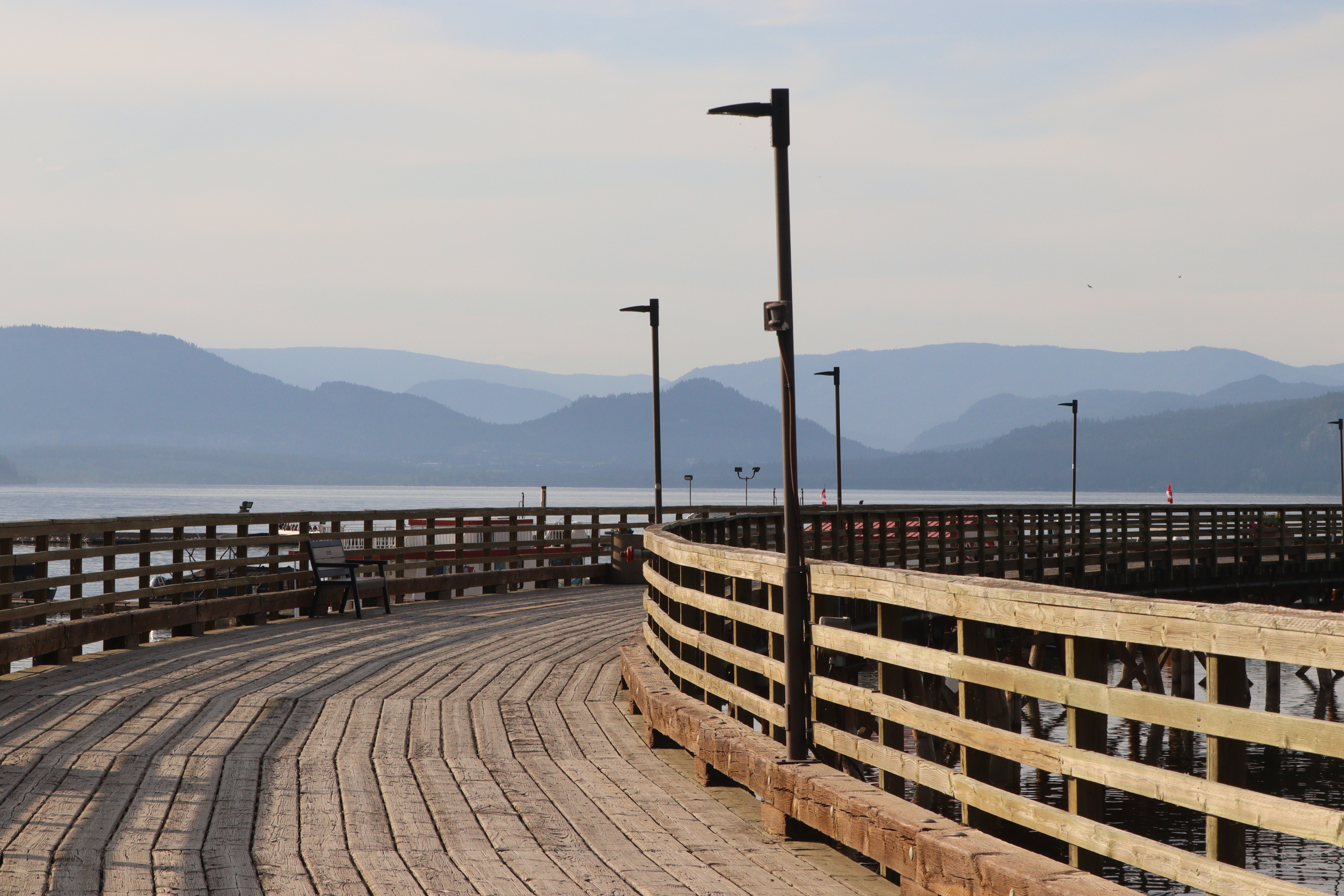
Salmon Bay Wharf: The town is surrounded on all sides by mountains!

Barn Swallows were nesting under the wharf.

Cliff Swallows nested on both sides of a building on the wharf.

A pair of Osprey hunted for fish for their family. The nest was near the parking lot.

A Yellow-headed Blackbird found lots of insects to eat that were hiding in the grate of the boardwalk.

In recent years, Yellow-headed Blackbirds have been found in limited locations in southern Ontario where Red-winged Blackbirds don't appreciate their cousins invading their habitat. The two species seemed to tolerate each other at this site.