Tuesday, November 12, 2024

 In the Heat of the Night!

Common Looper Moth:
We have likely used the moth trap for the last time in 2024. In order to set it up, temperatures must remain above 10 degrees Celsius in the overnight hours. October 30th and 31st met the temperature requirements. Moth numbers were down compared to earlier in the season, but that is to be expected and we still managed 10 species each night!

The trap is made up of a large bin that supports a light. The inverted bowl protects the light from moisture. Plastic supports help to direct the moths downwards. 

Inside is a funnel that the moths slide down.

Egg cartons are placed in the tub underneath the lid. Each section acts like a "room" for the moths.

The hole must be plugged in the morning so that the moths don't fly out of the trap towards daylight.

When the cartons are removed from the tub, it is important to look closely at both sides to watch for hiding critters.

Boston Dart: We have the only record in Lambton County for this species! The next closest report is 150 km to the east.
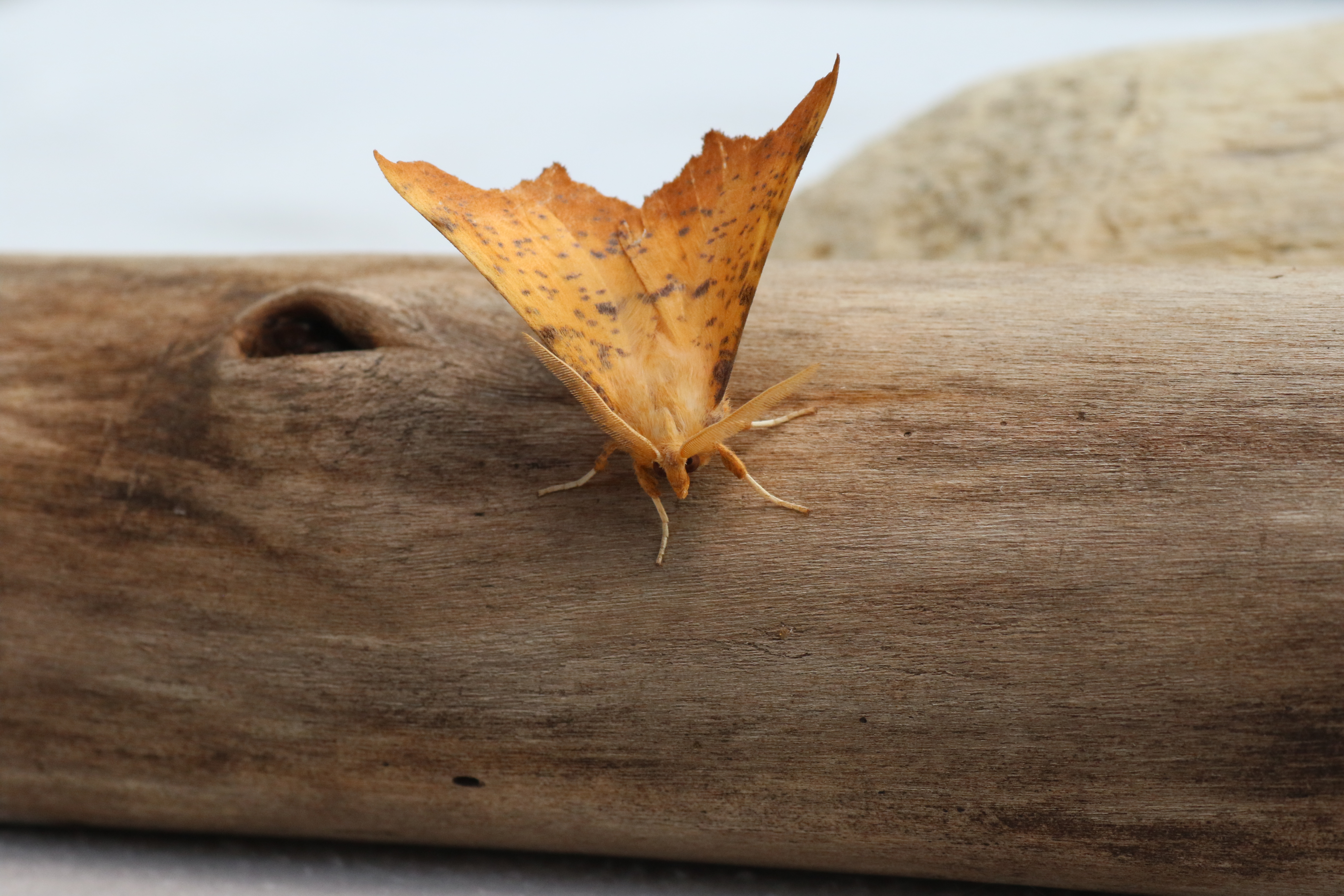
Maple Spanworm Moth - When at rest, it holds its wings in such a way that it resembles a fallen leaf. We see a lot of these each year.

Bi-lobed Looper - It looks like its wearing sunglasses!

Small-eyed Sphinx are able to hover which makes them efficient pollinators of flowers.
https://www.whatsthatbug.com/small-eyed-sphinx-moth-all-you-need-to-know/

We can usually convince the moths to walk onto a small stick, then move them to a piece of wood for photographing. Of course, some escape during this process. At the end, all moths are safely released in sheltered areas of the backyard. Our finds are recorded on iNaturalist, a citizen science forum that provides valuable data to scientists studying these species.

Sunday, November 10, 2024

 LaSalle Park and the Dundas Valley

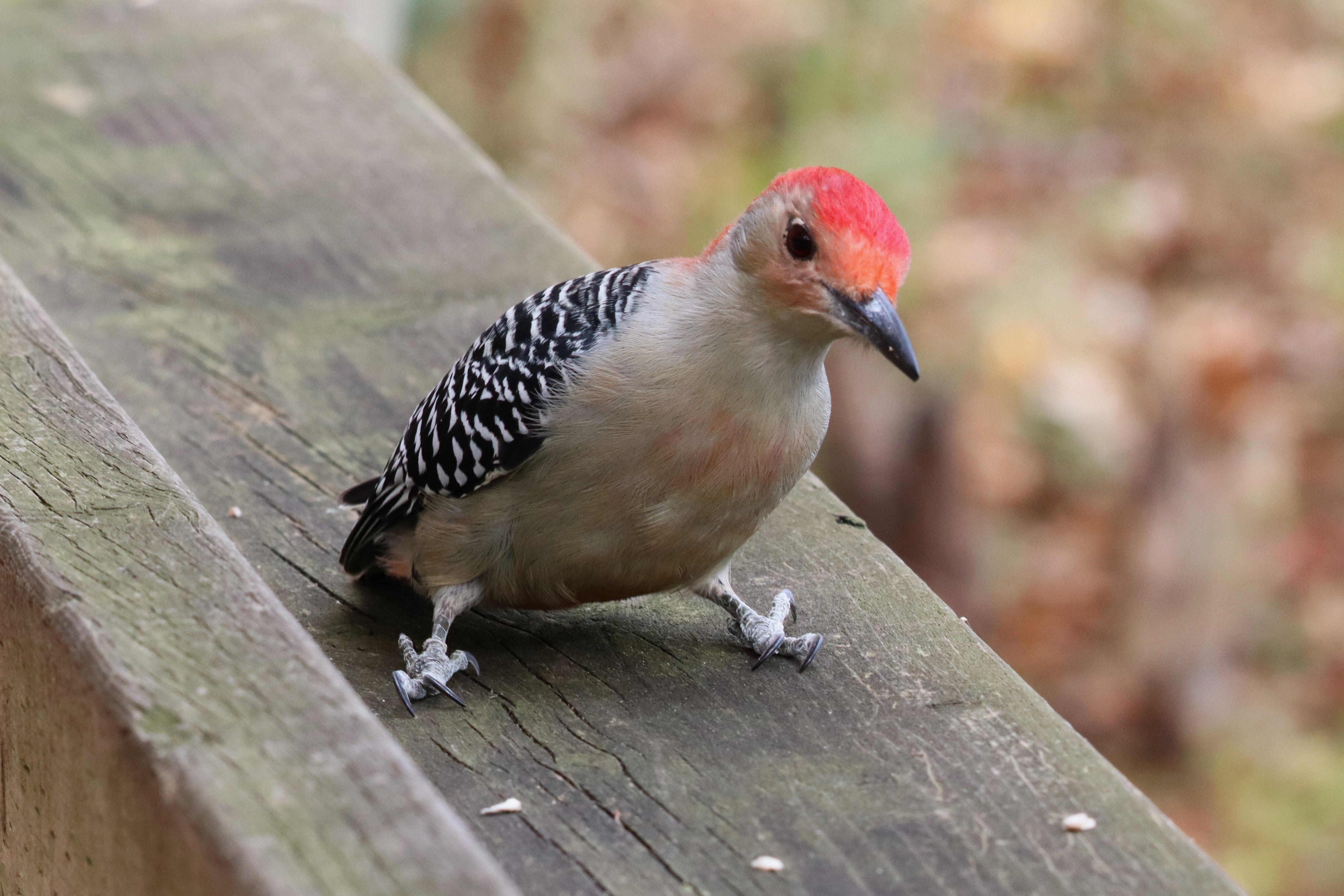
We enjoyed a walk along the path at LaSalle Park in Aldershot with views of the Hamilton/Burlington Bay. Seed had been placed on a railing and many birds, including a Red-bellied Woodpecker were on the hunt for food. The 'red belly' which often can't be seen, is visible in the lower photo.

We don't normally visit this area in November so were surprised to see only 2 Trumpeter Swans. An interpretive sign provided more information about the Swans which are only found in North America and are the largest swans in the world. They were almost hunted to extinction. In Ontario, a captive breeding program began in 1982, using eggs from a flock found in Alaska. Born to captive parents in 1990 at Wye Marsh, a Trumpeter known as "Pig Pen" for her messy eating habits, became the first Trumpeter Swan to nest in the wild when she found a mate in 1993. That same year, she became the first Trumpeter Swan to migrate in Ontario in 107 years when she flew from Wye Marsh to LaSalle Park to spend the winter. Each year she and her mate returned to LaSalle with their young, and others soon followed. LaSalle Park is considered to be the most important Trumpeter Swan overwintering site in the Province with up to 200 Trumpeters being found there from the end of November to mid-Feburary.

Even though American Coots swim like a duck, their feet are not webbed. They are actually members of the Rail family. Coots are kleptoparasitic, meaning that sometimes they do not hunt for their own food, but steal it from other birds.
https://animalia.bio/american-coot

A Great Blue Heron patiently waited for food to swim within striking distance.

A Grey Squirrel, hoping for food at the local squirrel cafe.

Dundas Valley Trail Centre

While walking along the rail trail between Pleasant Valley and the Trail Centre, we had good views of the surrounding area from our elevated location. In total we saw 5 White-tailed Deer.

A young Buck was well camouflaged in the trees and was difficult to photograph.

A watchful Cooper's Hawk kept an eye on the area. He is probably the reason for only seeing/hearing 10 bird species during our 90 minute walk. Most of the birds were distant and some, like the very vocal Carolina Wren were only heard.

White Birch Trees along the trail.

Friday, November 8, 2024

 6 Legs in the Fall!

With the exception of the last photo, all of these critters are insects, featuring 6 legs, 3 body parts, one or 2 pairs of wings, 1 pair of antennae, and an exoskeleton. They were all photographed on November 6th.

A very tattered Cabbage White Butterfly.

Oval circles on hind wing: Common Buckeye continue to fly on the milder days. I had not noticed before that the spots on the wings can change from oval to circular, depending upon how wide the wings are being held.

With wings outstretched, spots appear circular on the same Common Buckeye.

Large Milkweed Bug: They are always abundant on milkweed plants in our garden but it decided to rest on a Dense Blazing Star this week.

It is unlikely that American Painted Ladies overwinter in Ontario. They are highly migratory and move towards the equator to escape cold weather. With mild winters in recent years, it is possible that they will overwinter at the pupae stage.
The ROM Field Guide to butterflies of Ontario, Peter W. Hall et al, 2014

Praying Mantis egg case. Approximately 100 tiny mantis's will emerge in late spring/early summer.

A few plants, including this Goldenrod species are still blooming. A close look at the flower clusters reveal over a dozen ants looking for nectar.

The Autumn Meadowhawk is typically the last Meadowhawk to fly in the later fall season. This individual was well camouflaged on the Sand Cherry bush in our garden.

Common Drone Flies have been abundant lately. Two of them are sharing a Knapweed flowerhead.

iNaturalist suggests this is a Brown-lipped Snail, which is an introduced species from Europe. This Mollusk obviously doesn't have 6 legs, but it wanted its picture taken.

Tuesday, November 5, 2024

 Pinery November 2nd

Channel view

A moth monitoring station is being built to collect data about the moths that call Pinery home. I look forward to seeing it in operation once complete!

The Pine Tube Moth overwinters as a pupa in a tube that it constructs. The tubes are made from 5-20 eastern white pine needles webbed together to create a tube. Caterpillars build this as a shelter for themselves. Inside the tube, the caterpillars surround themselves with silken webbing. Adult moths are small and emerge by early May.
https://ag.umass.edu/landscape/publications-resources/insect-mite-guide/argyrotaenia-pinatubana


Shadows on the sand.

Praying mantis that came incredibly close to meeting her demise under my shoe.

Black-capped Chickadees were happy to see us, as usual!

American Red Squirrel hanging out where the chickadees feed.
Lake Huron Beach by the Dunes campground.

Sunday, November 3, 2024

 A Mild End to October:

With the recent mild weather, there has been lots of activity in Canatara Park. The ever acrobatic Black-capped Chickadee pulled apart some spider webbing to retrieve trapped critters for lunch.

While wandering along a trail in the meadow, I looked up to see a Cooper’s Hawk staring at me from 7 feet away! It remained in place, so I kept snapping pictures. When it finally left to pursue birds, it resembled a jet fighter making a low level pass over the field of Teasel.

Dekay's Brownsnake

When flowers are scarce, sometimes you just need to share! A Common Drone Fly and Fiery Skipper both found space on the flower head of a dandelion.

A Spotted Cucumber Beetle is trying to be inconspicuous at the edge of a dandelion while the Fiery Skipper nectars nearby.

A Raccoon was keeping a close eye on me!

I wasn't expecting to see Evening Primrose in bloom at the end of October!

Autumn Meadowhawk

Friday, November 1, 2024

 Fall Wings and an 

Unexpected Rainbow!

A pair of Golden-crowned Kinglets foraged for food just a few feet in front of me. It was very kind of them to stay close to the ground!

Golden-crowned Kinglet collage.

Tracks from Ring-billed Gulls: The birds hunted for invertebrates in the plant life that had washed up on the Lake Huron shoreline. 

Water patterns in the sand.

A sleepy Eastern Screech Owl enjoyed the afternoon sun. It was nice to see it back in the Wood Duck box, which is a regular winter sheltering location for Screech Owls.

Peek-a-boo! I’m watching you! The large circles on the wings of the Common Buckeye try to trick predators into thinking they are something larger.

A closer view of the Common Buckeye.

Map Turtle stretching in the sun.

Spined Macrathena: These orb weavers are sometimes referred to as 'Castlebacks' because of the spikes on the abdomen.

A 'Pot of Gold' appears to be on that freighter!! Perhaps the Captain of the ship was a leprechaun!