Wednesday, September 13, 2023

 Down at the Sydenham:

We spent a recent morning by the Sydenham River in hopes of finding Mudpuppies. We struck out with that species but managed to find several mussel shells and a few other treats! Mussels stabilize the riverbed and are a vital link in the food chain as they are a source of food for many animals including fish, turtles, birds and mammals. The Sydenham watershed is a refuge for mussels, supporting 34 species. It is the most mussel diverse watershed in Canada! All collected mussels were carefully returned to the river. For more info, check out the following link.
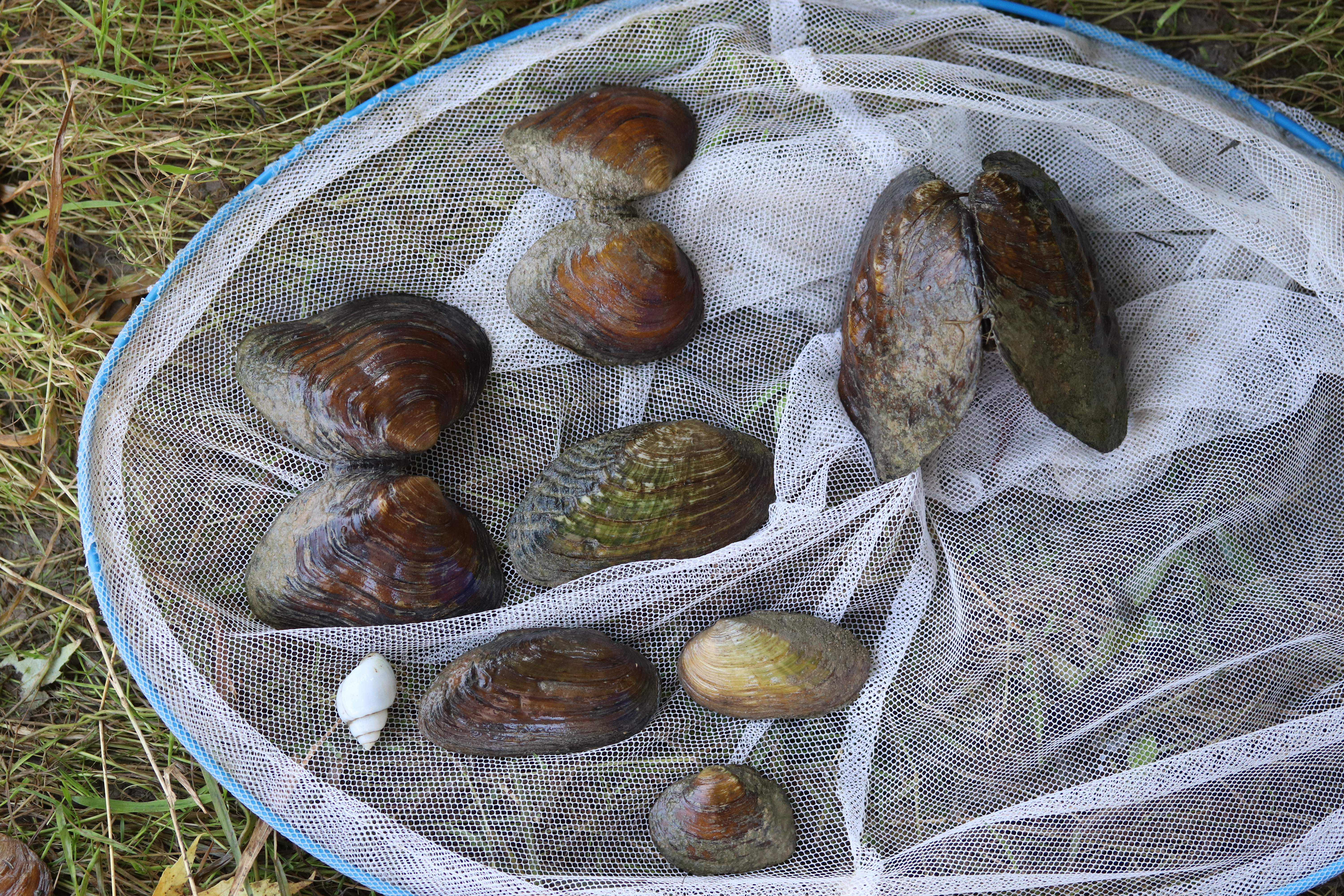
A selection of the mussels we found.

Purple Wartyback
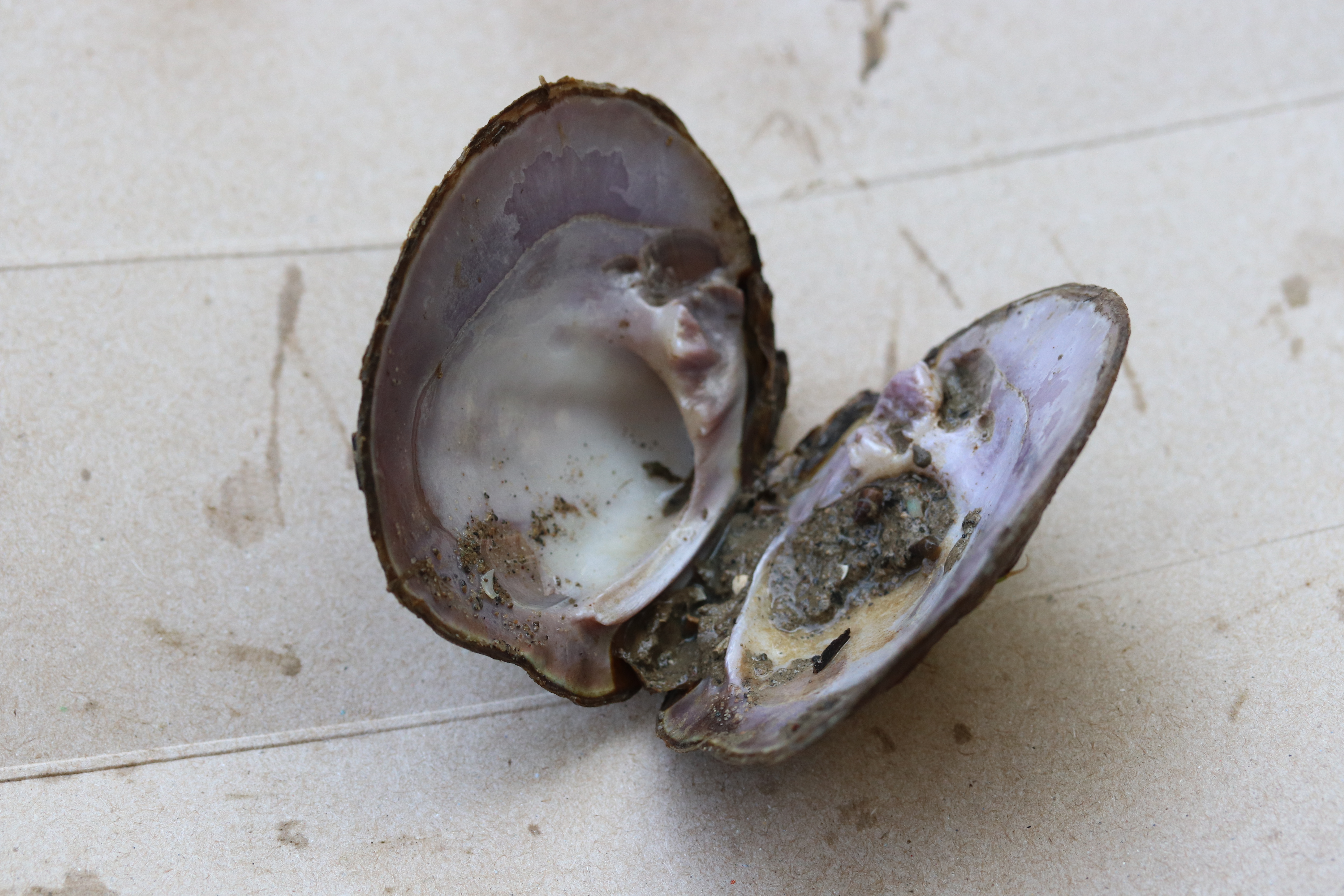
Purple Wartyback, inside shell

Three-ridge Mussel

Wabash Pigtoe

We placed the shells on a piece of cardboard before taking pictures. I noticed something moving which I initially thought was a blob of mud sliding down the cardboard. When it changed direction, I realized it was alive. I then transferred it to a plastic spoon containing river water. It is a member of the Water Penny Beetles.

Underside of the Water Penny Beetle larva (sp) showing it's white feathery gills and many legs which wriggled as it tried to flip itself over. Larvae feed on algae on rock surfaces, or in this case, algae growing on mussel shells. The presence of water penny larvae in a stream can be used as a test for the quality of the water as they are pollution-sensitive. They are 6-10mm in length and are typically found in stream riffles with a moderate to fast current, clinging to the underside of logs or rocks.
https://www.inaturalist.org/taxa/143858-Psephenidae

Sunday, September 10, 2023

 A Bit of This and That!

Turkey Vultures were roosting north of Watford earlier this week. At this time of year they gather prior to migration. In the morning, their wings need to dry before they can soar for the day. I counted 69 individuals in this photo and another dozen were nearby.

Two Monarch caterpillars at different ages of growth.

Praying Mantis' are one of the only insect species able to rotate their heads. I was able to walk to both sides of the mantis and the head followed my movements through 180 degrees!

An adorable little Grey Tree Frog is sitting on a Milkweed leaf, which I found entirely by accident. It was less than 2 cm in length!

A Green Heron speared a fish for lunch!

We drove past the farm where some zebras live to discover there is a new baby! It was one of the hottest days of the year and the wee one was having a nap on the ground next to Mom.

Friday, September 8, 2023

 Creatures of the Night in September!

When we realized that weather conditions were favourable. (reasonable temperatures, low wind, and getting darker earlier in the evening) we set up for another backyard moth night. Moths were not the only things attracted to the light. One of our first visitors was this beautiful Eight-lined Leafhopper! I have never seen this species before! It was the start of some exciting night-time finds, many of which were firsts for the year!

Dingy Cutworm Moth seems like an odd choice of name for such a beautiful moth! This one was very active and it took quite a while before it settled down long enough to take a picture.

The Bristly Cutworm Moth also had some nice markings.

Isabella Tiger Moth

Juniper Geometer Moth

Pale Beauty

The Locust Underwing was another moth that took time to settle down. We got brief glimpses of the striped underwing as it flittered around.

It was attracted more to the light than the white sheet.

The Locust Underwing spent 30 seconds on my face and when we were done for the night, it tried to hitch a ride into the house on Deryl's shirt.

I have heard people say bright lights at night can cause some insects to appear "drunk". That was definitely the case for this Northern Dog-day Cicada which flipped and flopped for several minutes before finally resting on its back on the grass.

Wednesday, September 6, 2023

Fun in the Backyard !

Robin "Mom" providing some last minute swim instructions to the crew.

Lots of chatter about who goes in first.

Line up at the shower stall!

A Katydid checking out the kitchen window.

A Common Checkered Skipper enjoys the Pearly Everlasting flowers.

Red-banded Leafhopper. Also known as Candy-striped Leafhopper

Green Lacewing came into the house in a basket of pears from the market.

This Purple-egg Stinkhorn likely grew from mulch we added to the garden. It lasted only a day in the hot sun. 

Sunday, September 3, 2023

 Diversity in Canatara!

From beach to forest, meadow and inland pond, Canatara hosts some diverse habitat allowing for a great variety of species. Earlier in the summer a Whimbrel stopped on the beach to "refuel" with invertebrates found in the sand. The curved bill assists in extracting food from the sand.

A White-rumped Sandpiper also took a break at the beach in mid-August! They nest near freshwater in the high arctic tundra. Migrants use almost any freshwater wetland with muddy margins, as well as sod farms and flooded fields, as long as water is 2 inches deep or less.
https://www.allaboutbirds.org/guide/White-rumped_Sandpiper/id

Beach sand is not the typical location to find Viceroy butterflies. This one was getting minerals and salts from decaying scat. The black line, perpendicular across all 4 wings, separates this species from the more "famous" Monarch butterfly

My eye caught something shiny at the edge of the pond. It is the exuvia (exoskeleton) of a Common Green Darner. Dragonfly species will spend their early years under water at the nymphal stage. When they are ready to 'cast off' the last layer of the "exuviae", they climb out of the water, crawl out of their skin, dry off in the sun and begin to fly!

Bumble Flower Beetles get their name because of the buzzing sound they make when flying around flowers. Adults can live for 6 months. They eat nectar, flower sap and the juices from over ripe fruit such as peaches, grapes, apples and pears. The larvae feed on decayed plant matter. It was my first encounter with this species that looks a bit like the insect version of a teddy bear!
https://beetleidentifications.com/bumble-flower-beetle/

I love the big red eyes on this individual. I have not been able to identify the species, but I believe it is in the Blow Fly family.

Song birds have been feasting on caterpillars that can be found both in the meadow and in wooded areas. A Red-eyed Vireo caught a fuzzy caterpillar for breakfast.

Friday, September 1, 2023

 Canatara, late August!

An American Goldfinch must have found somewhere to take a bath as he seems to be drying in the sunshine. He sat in this position with his tail feathers fanned for over a minute!

A yawning Blandings Turtle

Blandings Turtle from the other side of the creek.

Gold-marked Thread-waisted Wasps mating. Adults are nectar feeders. Larva eat caterpillars provided by the parent before they hatch from the egg.
https://bugguide.net/node/view/455

A Long-jawed Orbweaver hanging out by the lily pads, waiting for a snack to fly by.

A well-named Dragonfly: White-faced Meadowhawk.

I watched a Chinese Praying Mantis cross a grassy path in front of me. It was a struggle for the mantis to walk without the use of its front legs which were carrying a hairy caterpillar. Once it reached the path edge, it climb a plant and proceeded to eat its breakfast.

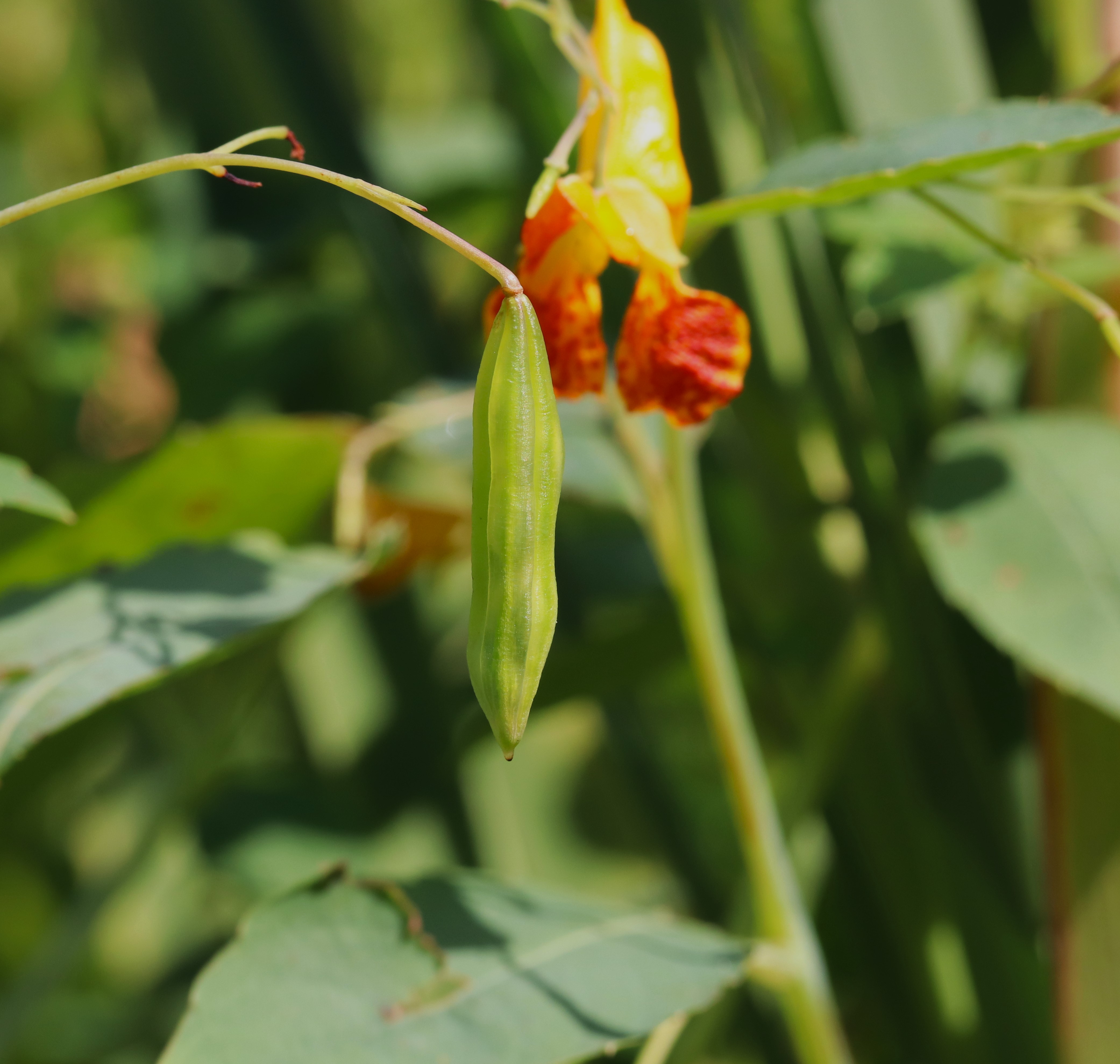
One of my favourite "late summer" activities is popping the seed pods on Jewelweed. The bursting of the seed pocket is another form of seed dispersal similar to Dandelion fluff blowing in the wind and burrs sticking to clothing or animal fur.

A hungry White-breasted Nuthatch found a cicada to eat. He wedged it in the bark and pummeled it with his beak.

Wednesday, August 30, 2023

August Wildlife near Petrolia:

Great Spangled Fritillaries hanging out on Purple Cone Flower.

Snapping Turtle lurking in the pond and keeping an eye on me!

2 large Snapping Turtles surfaced and dove while swimming in the pond. They did not approach each other while I watched.

Tiger Swallowtail

The Wandering Glider is considered to be the most widespread dragonfly on earth with populations on every continent except Antarctica. They make an annual multigenerational journey of 18,000 km. Individuals have been known to fly 6,000 km!
https://www.inaturalist.org/taxa/108344-Pantala-flavescens

Juvenile Green Heron

Green Heron's could be seen and heard flying around Henderson C.A. One chose a Spruce tree to take a well-camouflaged rest. I probably wouldn't have noticed it if I hadn't watch it land at the top. Although they are known to nest in Spruce trees, there was no sign of a nest in the tree. This particular location was a little too close to a roadway.