Tuesday, May 13, 2025

 Dunes and Swales and Dunes!

We enjoyed a beautiful Mother's Day, walking trails in North Lambton. Some flowers were blooming, including lots of Fringed Polygala.

Northern Starflower

An unexpected find was a Beaverpond Baskettail. Luckily it flew, or we may have overlooked the camouflaged dragonfly.

A few steps further down the trail, we found perfect wetland habitat for both the Baskettail and Marsh Marigold!

Historically the roots of White Rattlesnake Root were applied as a poultice to rattlesnake bites by the Iroquois. The plant will bloom later in the summer.
https://www.inaturalist.org/taxa/130950-Nabalus-albus

I noticed some Eastern Tent Caterpillars "twitching" on the outside of their tent as an Ant walked among them. I wasn't able to find any information specific to these two species but there are many examples of mutualism between ants and caterpillars in nature. Ants are known to "tickle" caterpillars which causes them to secrete food for the ants. In turn, the ants can help to protect the caterpillars from predators. 

A male Eastern Towhee happily sang high in a tree!

When we entered a more open area with lots of sunshine, we started finding butterflies including Brown Elfin. Adults will fly from early May to early June. They overwinter as a chrysalis.
The ROM Field Guide to butterflies of Ontario. Peter W. Hall, et al 2014

Clouded Sulphur 

The Hoary Elfin has a frosted patch on the margin of the wing. It is very rare in SW Ontario and overwinters as a chrysalis.
The ROM Field Guide to butterflies of Ontario. Peter W. Hall, et al 2014

A beautiful Olympia Marble, nectaring on its host plant, Lyre-leaved Rockcress.

Festive Tiger Beetle: Adult tiger beetles are voracious predators, giving chase across the ground at speeds of up to 53 body lengths per second, about 10 times faster than a top human sprinter!
https://www.canada.ca/en/environment-climate-change/services/species-risk-public-registry/publications/wild-species-2005/chapter-6.html

Big Sand Tiger Beetle

A young Eastern Garter Snake enjoying the sun's heat in a pile of boards.

Sunday, May 11, 2025

 Mostly Wings!

Despite the cool weather, spring is springing forward! We found hundreds of tadpoles in a vernal pond recently. Because it was in an upland area, they are likely American Toad tadpoles. Tadpoles are difficult to identify to species at this age.

American Goldfinch in breeding colours.

A Bald Eagle, approximately 4 years of age (head is not fully white yet), watches over Lake Chipican in Canatara Park.

Meowing sounds in the forest can often be attributed to the Gray Catbird!

A busy Muskrat carried green leaves back to the lodge for consumption.

A Raccoon wasn't bothered by us standing behind a fallen log as it searched for food in a wet area.

Usually Turkey Vultures soar high over Canatara. This individual made a lot of noise as its wings banged into branches in a landing attempt. I noticed a foul smell in the area. Perhaps it was zeroing in on a meal!

An elegant looking White-crowned Sparrow visited our backyard recently!

It is a distant photo, but we saw a pair of Red-headed Woodpeckers stop by during migration. They have nested in the park in recent years, but the favourite tree is no longer standing.

American Redstart

Least Flycatcher

Warbling Vireo
Looking forward to more birds showing up this week!

Friday, May 9, 2025

 Spring Bird Activity!

Territory battles are occurring between species. The fluffed up feathers of this Green Heron are the result of being dive bombed by a pair of Common Grackles. The Heron stayed in place, and the Grackles eventually left.

The camera was ready when I heard a commotion above and saw a pair Northern Flickers begin mating! The coupling didn't last long.

An American Robin was tightly wedged against the side of the building as she strategically placed a piece of grass on the nest with her beak.

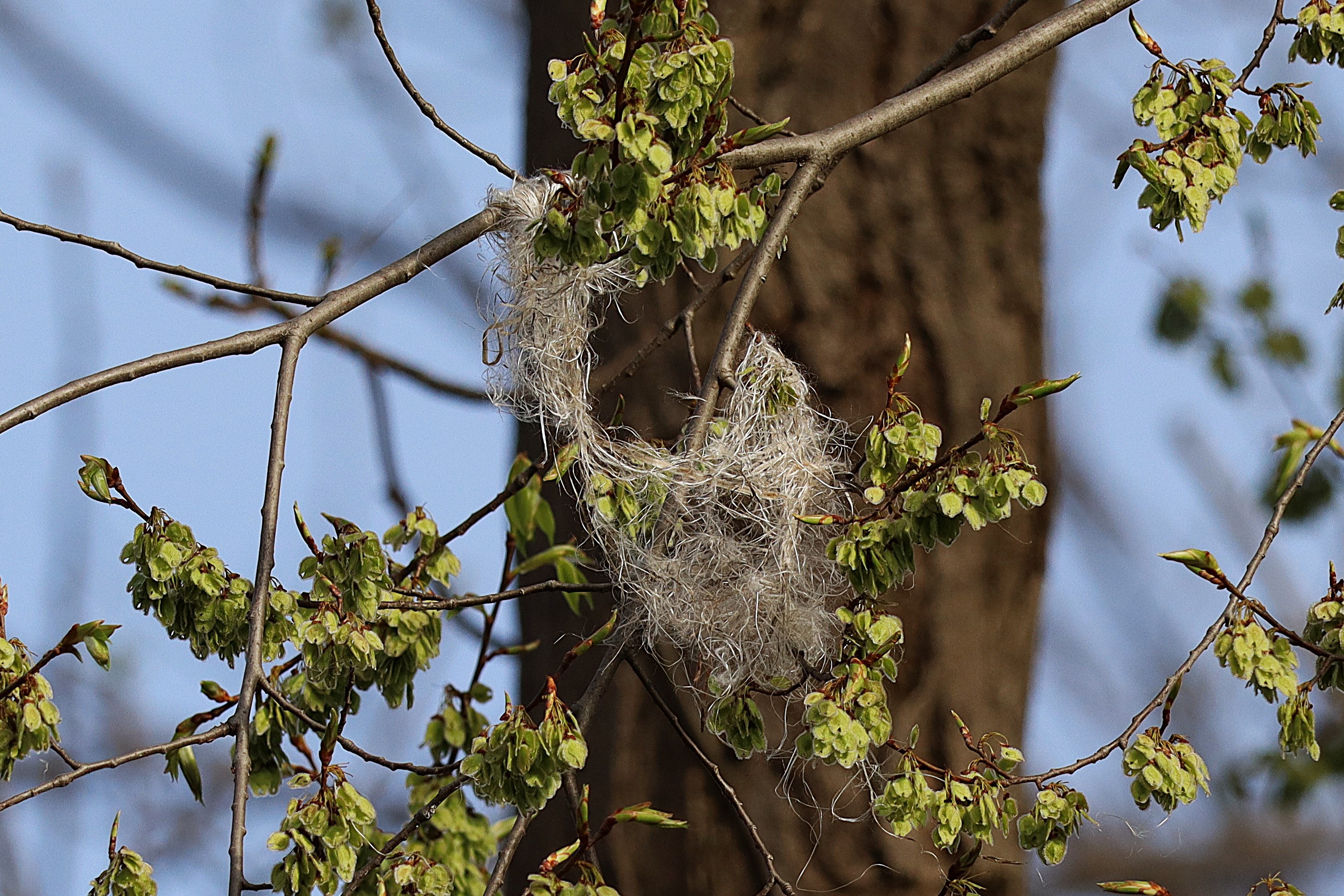
Baltimore Oriole was visible inside the fibres of her nest. Many strands of material are secured around the twig to keep the hanging nest from falling to the ground.

A slightly different angle of the oriole nest after she left to get more supplies.

Black-throated Blue Warbler; one of my favourites. The white square (or hanky) is diagnostic for both the male and female.

Black-throated Green Warbler

If you look closely, there are 3 Rose-breasted Grosbeaks on the ground. Two males boasting their bold, black and white colours with a red bib, are on the left. A well-camouflaged female is in the upper right of the photo.

Yellow Warbler hunting for food on a sunny day!

Tuesday, May 6, 2025

 Wings That Make Me Smile!

An American Robin sports a bushy moustache beside our house!

There have been very few Canada Goose goslings in the past two years (which is a good thing) but it's always nice to see the fuzzy babies.

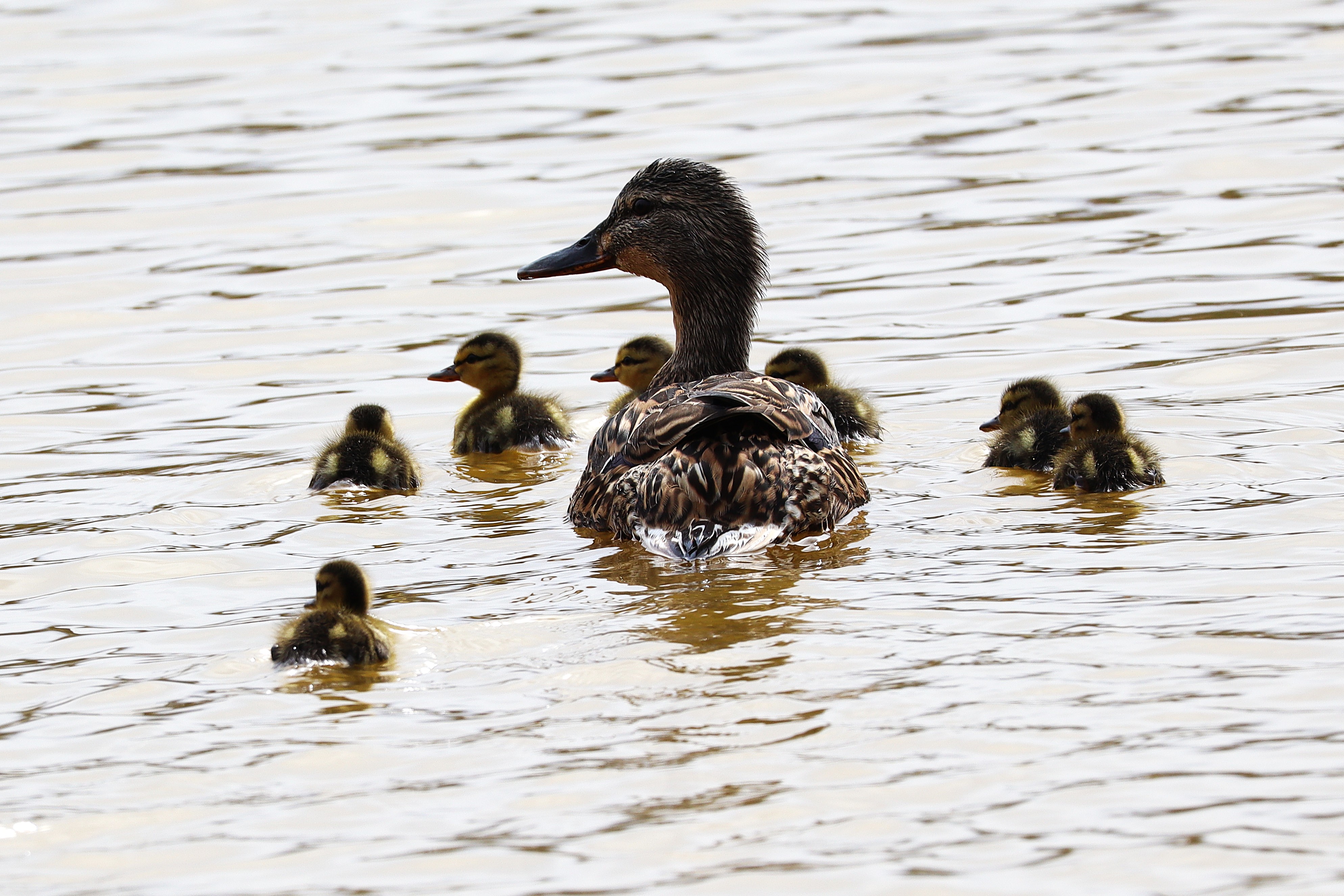
Even Mallard ducklings are hatching. I usually don't see Mallard families until a little later in May.

2 Male Red-winged Blackbirds had a territorial squabble right beside me!

A Canada Goose decided to become a 'perching' bird!

He seems to be wondering if perching in the tree was a good idea after all!!

The yellow rump, on the Yellow-rumped Warbler displayed nicely on this bird! So often birds are given names that don't necessarily help with identification.

I wasn't expecting to hear the Carolina Wren belting out his song while holding a very large larva in its beak! The larva definitely did not soften the wren's vocalization ability!

An Ovenbird was surprisingly quiet. This elusive bird was sitting in a low tree and in the open!

Eastern Screech Owls are again nesting in the park! This individual is likely the male who is keeping an eye on the cavity where his mate sits with the eggs.

Sunday, May 4, 2025

 Prescribed Burn, Part 2 - Fauna

There was a very narrow window of opportunity in which the burn could take place. The burn was delayed by one week due to windy gusts and there was concern about reptiles wandering the following week. However, temperatures were cool on burn day which kept reptiles under ground. Team members scouted the area and if any reptiles had been found, they would have been carefully placed in pillow cases until conditions were safe again.

Wild Lupine is an Oak Savannah plant that requires open sun for growth. Some patches of lupine remained outside of the burn area. Any plants that burned, would quickly grow back. Lupine, along with other species including New Jersey Tea, are important host species for many insects. Burning stimulates the growth of native grassland plants and suppresses invasive species.

A Yellow-rumped Warbler hunted for insects in the tree canopy shortly after the burn extinguished itself.

Prior to lighting, a few butterflies including an Azure sp. could be seen.

Bald Eagle soaring overhead after the fire

 Field Sparrow: enjoying the sun on the day that we didn't burn.

Clover Looper Moth: resting across the road.

A small mouse (species) ran up a tree to escape the flames.

Variegated Ground Spider remained on the trail.

A member of the Leaf-footed Bugs, crawled across a fallen log, out of the fire zone.

14 Wild Turkey Eggs! Before the fire was set in the second block, team members patrolled the area looking for snakes and turtles. No reptiles were found, but an American Turkey flushed from her nest. The eggs were in a wood pile that was out of the burn area. It was expected that Mom would return once people vacated the area.