Saturday, June 12, 2021

 Bridgeview C.A. Petrolia!

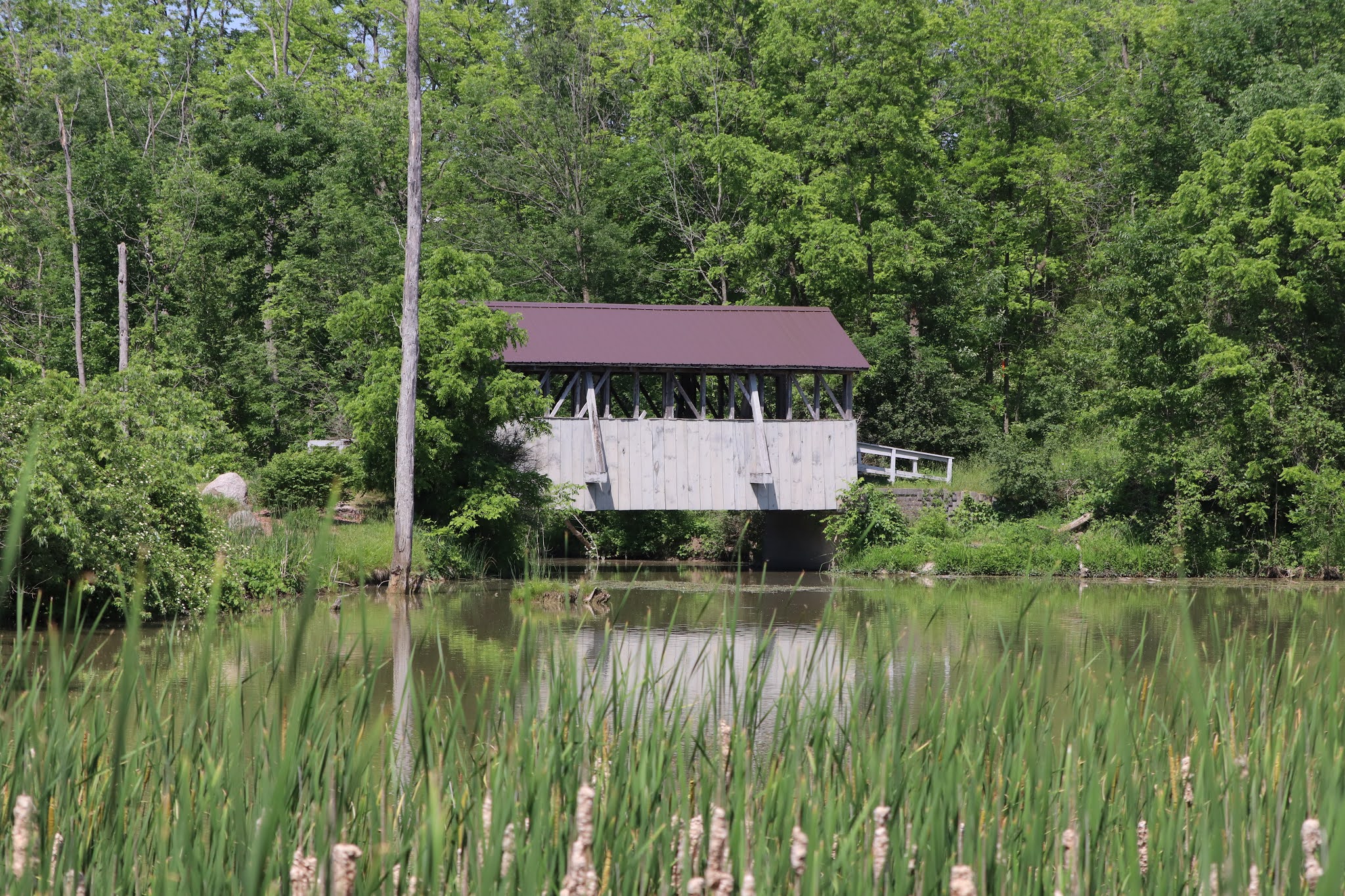
I had a chance to rediscover Petrolia's Bridgeview Park this week. It has been several years since I last walked the trails and many improvements have been made. This covered bridge was constructed as part of a Federal Government funded project in the 1980's.

The trails are well groomed and 6 feet wide! Most trails are complete, but once all sections are finished, there will be approximately 6 kilometres of trails! There are many turns in the meandering trails which are bounded by Bear Creek, and the Petrolia Discovery. 

A few historical plaques tell some history of this area.

We enjoyed the bird and butterfly populations, including watching a Green Heron who rested for a bit.

Today was only the second time I have seen a Tawny-edged Skipper. It is a local resident in Ontario and can be found in open grassy habitats.
A pair of Delicate Cycnia Moths mating on some milkweed. They are members of the Tiger and Lichen Moths. Members of this family have a "tymbal organ" which uses a thin membrane to produce ultrasonic countermeasures against the echolocation system of bats (their chief predator).  https://www.cirrusimage.com/moth_cycnia_tenera/

Lots of suitable habitat to raise a young family of White-breasted Nuthatches. 
A youngster is being fed some lunch!

Look at that proboscis sipping nectar!
Many species of flowers are available for thirsty Skippers! 
Bridgeview is an enjoyable place to explore nature!


Thursday, June 10, 2021

Turkeys in the Park!

I was delighted this afternoon when I rounded a corner and found a Wild Turkey Hen with her 5 chicks!

This may be the hen that spent a lot of time in our backyard during the winter. Male Wild Turkeys provide no parental care. Newly hatched chicks follow the female, who feeds them for a few days until they learn to find food on their own. (Cornell Lab, All About Birds)

This little chick was busy eating plants and bugs and enjoying an afternoon walk with its siblings!
While visiting the Point Lands, I watched a pair of Tree Swallows defend their nest box from a male House Sparrow. House Sparrow sometimes evict other birds from nest holes, including Eastern Bluebirds, Purple Martins and Tree Swallows. House Sparrows were introduced into Brooklyn, New York in 1851. By 1900 they had spread to the Rocky Mountains and are now common across all of North America except Alaska and Northern Canada. (Cornell Lab, All About Birds)

A Furrow Orbwearver worked diligently to remove cotton clogging his web that fell from nearby Cottonwood Trees. I watched him separate and drop 2 cotton balls!


It must be hard to catch flies if your web is full of cotton! Spiders use a lot of 
energy to spin a web so these orb weavers may have a tough time finding food!

Wednesday, June 9, 2021

 Tall Grass Prairie Complex

We made a trip to Windsor Tuesday and stopped for a walk at the Tall Grass Prairie Complex in hopes of finding some new butterfly species. The hot and humid weather helped us to find at least 12 species, two of them "Lifers".

Least Skippers were abundant. This is Ontario's smallest butterfly with a maximum wingspan of 26 mm. (ROM Field Guide, Butterflies of Ontario)
.
The Northern Cloudywing was a "Life" Butterfly! It spends the winter as a mature 
caterpillar within a leaf nest. (ROM Field Guide, Butterflies of Ontario)

Silvery Checkerspot: Upperwing (top) and underwing (bottom). It is found 
in a variety of habitats including woodland edges, roadsides and marshes. 
This was only my second siting ever of the species.

I had forgotten there was a population of Rattlesnakes in the Windsor area. We found the section of the Tall Grass Prairie where they are being repatriated. We decided it was too hot for them to be sitting in the open so we ventured down the trail. I would have taken a photo of one if we saw one....but we didn't.

Deryl took this photo of a Banded Hairstreak, our first of the year for the species. The larva eats buds and leaves of oaks, hickories and walnuts, especially butternut. (ROM Field Guide, Butterflies of Ontario)

Prime Real Estate - Three butterflies on one Blackberry leaflet! I found these 3 soaking up the sun in Canatara Park this morning. 2 Northern Crescents and 1 Hobomok Skipper.


Saturday, June 5, 2021

 An Unexpected Surprise Tonight!

An immature Yellow-headed Blackbird (one year old), was enjoying the scenery under the Bluewater Bridges this evening. They are considered to be a mid-western species but a few nesting colonies exist in the east. They breed and roost in freshwater wetlands with dense emergent vegetation such a cattails. (Cornell Lab, All About Birds) Occasionally, young birds not yet ready to mate, will fly off course out of their normal range.

Most of his time was spent foraging for insects in the field. He enjoyed eating the small moths that were plentiful.

He twice flew to the edge of the St. Clair River for a drink on this hot evening!

Bluewater Bridges are in the background!
 It was my first time seeing this species in Lambton County!


 My Favourite Things! (This week)

I watched a Monarch lay eggs on the milkweed in my backyard. The centre of this heavily cropped photo shows one white egg, about the size of a pin head. It can take between 3 to 8 days for the egg to hatch.

Mating Crane Flies.

I watched a Crane Fly trying to lay her eggs in the dry earth. You can see her abdomen touching the soil. Her ovipositor is at the end of the abdomen.

At least one Great Egret has a favourite roosting area in Canatara. Notice how he is leaning backwards? He was being harassed by a Red-winged Blackbird. (top left of photo)

An inch worm going for a walk!

After an early morning rain, water droplets clung to the "teeth" of some Wild Strawberry plants.
Sunset over Lake Huron earlier this week.


Thursday, June 3, 2021

Minnow Eating Grackles!

Thanks to a friend pointing this activity out to me, I was able to watch a small flock of Common Grackles fish for their morning snack!

Minnows washed onto bottom tier of the erosion control at Point Edward Lighthouse were easy picking for the Grackles! The water level needs to be "just right" or the fish will not be trapped on the rocks.

 
I previously did not know that minnows are listed in the regular diet of Common Grackles. They are omnivorous feeding on insects, spiders, millipedes, earthworms, crayfish, minnows, frogs, eggs of young of other birds and small rodents! They eat a more vegetarian diet in the winter including berries, seeds and acorns. (Audobon Guide to North American Birds)

They didn't seem to mind getting their feet wet!

But sometimes they needed to shake to get rid of the water on their feathers!

They tended to fly to dryer land before devouring the prize.

Eventually wave action from passing boats washed the minnows away and the Grackles departed.


Tuesday, June 1, 2021

 Really Cool Insects!

We have some extremely interesting insects living in our area. Some of my favourites from the past few days are highlighted below:

Calligrapha Beetle species each have a unique pattern of black markings which include dashes, lines, dots and curves. They come in a variety of colours and often glimmer like jewels. (www.insectidentification.org/insect-description.) The Dogwood Leaf Beetle is in this family and I saw 2 on a recent walk to Canatara!

Green Lacewings are natural enemies of many types of soft bodied insects. Adults have delicate "lacey" wings and golden eyes. (https://entomology.ca.uky.edu/ef148) They are less than an inch in length. A friend noticed this beautiful creature as it fluttered among the plants at Blackwell Trails Park.

The ultimate camouflage! Can't get a much better match than that!!
(centre of photo, green caterpillar, underside of leaf)

The Black Giant Ichneumonid Wasp has an ovipositor 3 1/2 times the length of its body. (The 10 c.m. long, needle-like ovipositor is visible in the above photo). Although it looks menacing, they don't sting humans. The long ovipositor is used to lay eggs in the bodies of grubs, larva or pupae. Ichneumons help to control insect populations by eliminating many insects before they reach the reproductive stage. (Missouri Department of Conservation)

In the past week I have seen 2 species not normally found in SW Ontario. Above, the beautiful gold and black of the Four-spotted Skimmer is usually found around Algonquin Park.

A friend texted me about another insect not normally living in our area. Since it was a "Life Butterfly" for us, we stopped on our way home from North Lambton. The Silvery Blue is a gorgeous, small butterfly and we found a minimum of 3 individuals! Perhaps their range is increasing to the south!