Sunday, August 14, 2022

 Backyard Life:

An American Goldfinch became the 5th bird species that we have found playing in the backyard waterfall! It has been a favoured choice for thirsty birds, squirrels, skunks and even raccoons! We have yet to see a raccoon in the water, but the movement of large stones leads us to believe one could be the culprit.

2 male Baltimore Orioles calmly took turns at the bird feeder!

Black-eyed Susans are in full bloom. I look forward to seeing what kinds of life they attract this year!

A member of the Grape Leaffolder Moths had a rest on the flowers last evening.

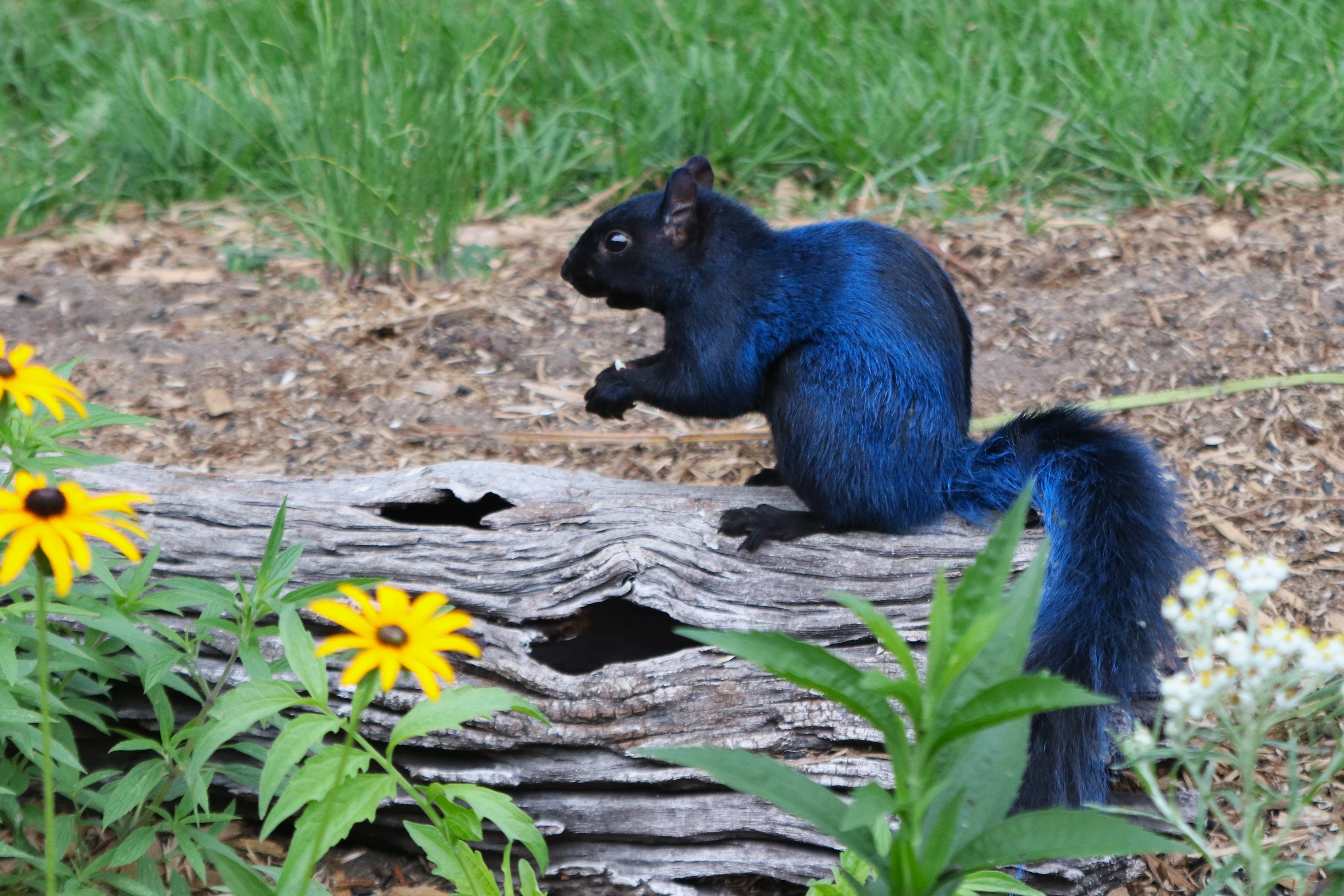
I was saddened to see a blue squirrel in Canatara Park a few days ago. This morning there was one in our backyard. By scanning the pictures, I can tell they are 2 different squirrels. I wonder how many more are out there? I assume they are part of an elaborate squirrel relocation project by an irate home owner who got carried away.

Thursday, August 11, 2022

 A Visit to Erieau!

We enjoyed a recent walk along the Erieau Rail Trail. This old bicycle known as a "Penny-farthing" or "high wheeler" sits at the trail head.

Barn Swallows enjoyed a few resting spots between their flights to catch mid-air insects. 

A pair of Belted Kingfishers appeared to be in a constant territorial argument as they chased each other along the water's edge.

Lots of milkweed provided a food source for Monarch Caterpillars.

We found an adult Monarch resting on a Sunflower head.

Looking out over Lake Erie: Although it boasts a beautiful colour, the invasive Purple Loosestrife was abundant. This introduced European plant forms dense stands with thick mats of roots which degrade habitat for wildlife. Each plant can grow as many as 30 flowering stems that produce 2.7 million seeds each year! In 1992, the Canadian and American governments approved the release of 2 European leaf-eating beetles which are natural enemies of the plant. The beetles were widely released in Ontario and purple loosestrife populations at many sites have been significantly reduced.
https://www.Ontario.ca/page/purple-loosestrife

Sunday, August 7, 2022

 Local Birds!

Now that the busy nesting season is coming to an end, we are starting to see Great Egrets in Canatara Park. More will be roosting over night in the park as we get closer to September.

The Eastern Kingbird family were hunting for dragonflies and other insects recently. The parents were watching the kids catch their own food!

This male Eastern Bluebird was also supervising one of his offspring in the quest for food.

A Spotted Sandpiper strutted along in the puddles that formed 
when the little lake was drying up. Luckily the water levels are improving after recent rainfalls.

Deryl found two Willets on the beach this week. Many shorebirds have started their southward migration now that nesting season is ending. Although both parents incubate the eggs, only the male Willet spends the night on the nest. Like Killdeer, Willets will pretend to be disabled by a broken wing in order to draw attention to themselves and lure predators away from their eggs or chicks. Cornell Lab, All About Birds

A juvenile Red-bellied Woodpecker has been visiting our yard recently and really enjoyed the cherries we placed on the platform feeder! 

Thursday, August 4, 2022

 Germain Park: August 2nd.

The flower gardens at Germain Park are attracting butterflies. There are many non-native flowers in the gardens , but luckily there is also a mix of native flowers which provide a better food source for our butterflies and other pollinators.

Red Admirals were the most abundant of the species that we found. A Butterfly Bush provided a good nectar source for the butterflies.

Silver-spotted Skippers have similar colouring to the Red Admirals but are a smaller species, with very pointed forewings.

The non-native Cabbage White butterfly on a non-native cultivar.

Black Swallowtail on Butterfly Bush

First Fiery Skipper of the year! In Ontario, it is a rare-to-uncommon breeding migrant that is gradually becoming more common as its range expands northward. Its permanent range extends from Argentina north through Central America and the West Indies to the S.E. United States. The ROM Field Guide to butterflies of ONTARIO, Peter W. Hall et. al.

Even a Ruby-throated Hummingbird found a nectar source!

We didn't go looking for Pearl, but she (or one of her offspring) found us. The squirrel is not an albino as it doesn't have red eyes. The white morph of the Eastern Grey Squirrel has a naturally occurring gene that is very rare. https://untamedscience.com/biodiversity/white-squirrel

Monday, August 1, 2022

 A Day of White!

My camera found white flora and fauna on today's walk through Canatara Park, starting with a Fragile White Carpet Moth. It can be found in Canada from Newfoundland to British Columbia.

I soon found another white moth of a slightly larger size: Northern Eudeilinia Moth. There are only 2 rows of faint spots curving across the wings. Its host plant is Dogwood.

Many Cabbage White butterflies were patrolling the fields today. I managed to capture 3 in this picture. They are native to Europe, Asia and northern Africa and were accidently introduced to North America where they are now very common.

Even some caterpillars such as this Hickory Tussock Moth, were covered in white hairs.

Many pollinators were feasting on the white flower heads of Queen Anne's Lace.

My last stop was by the lake where a Great Egret sat preening its feathers.

Sunday, July 31, 2022

Beautiful Butterflies!

 Some of my recent favourites!

I didn't get to see any Common Buckeyes last year so am happy to have found a couple so far this year. They get their name from the bright and colourful eye-like markings on each of the wings. These eyespots are an adaptation to scare away their predators. The adults live from 6-20 days. www.butterflyidentifcation.com/common-buckeye.htm

American Lady on Knapweed

Black Swallowtail: This species is a noted "hill topper" among Ontario Swallowtails with males gathering and patrolling around the highest point of land awaiting females who usually ascend the nearest hill upon emerging. They have two generations per year. The ROM Field Guide to Butterflies of Ontario, Peter W. Hall et al.

Eastern Tiger Swallowtail on  Common Teasel

Tiger Swallowtails are avid mud puddlers that can sometimes be seen up close when sipping moisture and minerals from the ground. The ROM Field Guide to Butterflies of Ontario, Peter W. Hall et al.  I photographed this individual at a small pond in Canatara that is drying up from the recent drought conditions.

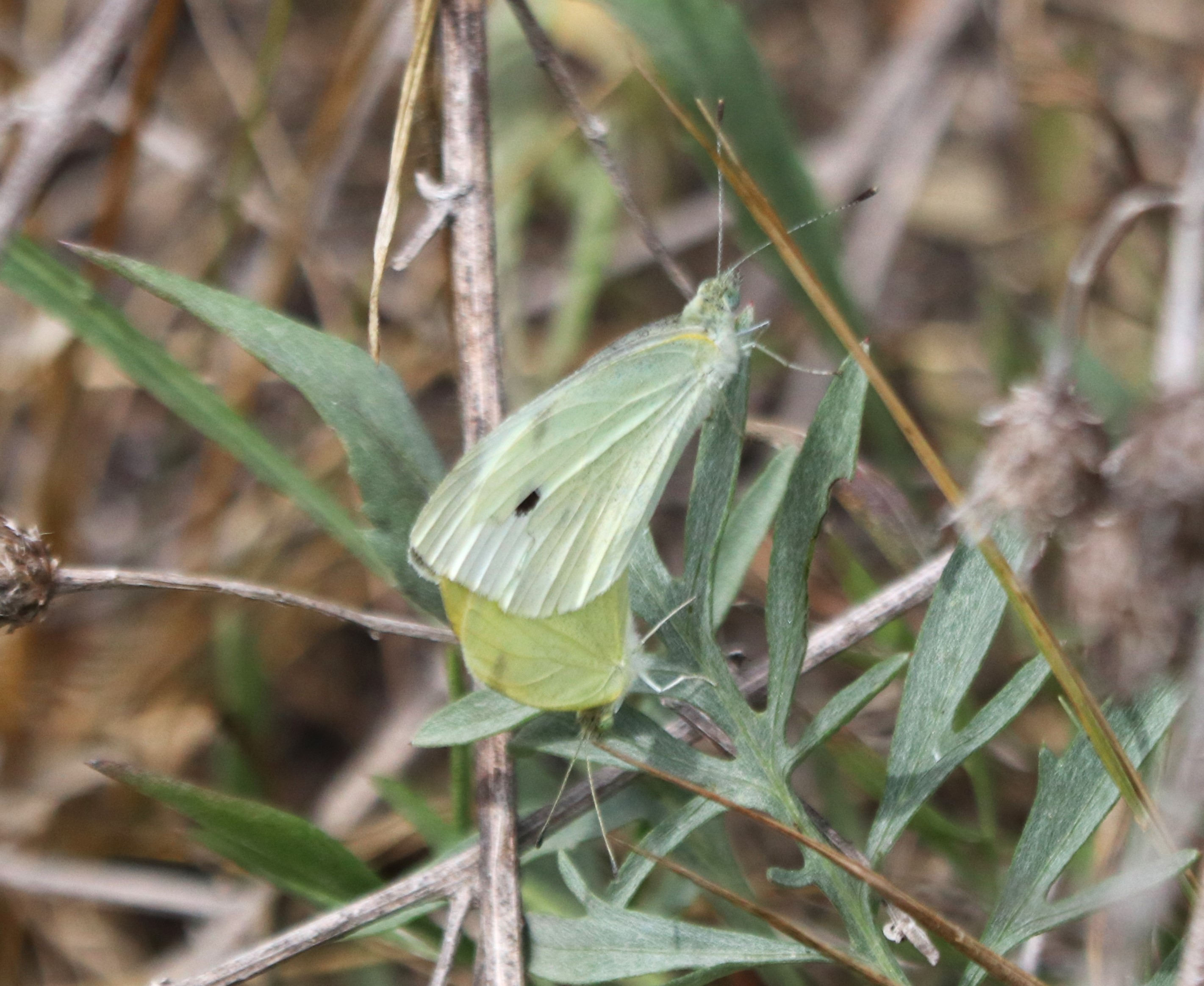
Cabbage White Butterflies, mating

Monarch Butterflies do not mate until they are three to eight days old. When they mate, they remain together from one afternoon until early the next morning, often up to 16 hours!  www.monarchjointventure.org/monarch-biology/reproduction

Friday, July 29, 2022

 Some New Finds:

This member of the Dragonfly family, Flag-tailed Spinyleg, was a new species for me! They prefer small, clear, sandy or mud bottomed streams with a steady current. It was photographed along the Sydenham River in South Lambton. odonata.tacc,utexas.edu/index

American Pelecinid Wasp: In North America, male American Pelecinid wasps are extremely rare. Almost all of these wasps are females so they resort to reproduction through parthenogenesis. Parthenogenesis means the eggs don't have be to be fertilized to develop. I watched this female land on the leaf in front of me. She then began crawling across the grass and I have since learned she was searching for June beetle grubs located under the ground. Once a grub is detected, she will insert her abdomen into the ground, up to 2 inches deep and lay a single egg on the grub. When the egg hatches, the wasp larva immediately chews through the beetle grub's exoskeleton and begins eating the grub alive. When the grub has been consumed, the wasp will pupate underground before emerging as an adult. 
I may have witnessed this juvenile Eastern Bluebird's first flight! From a distance, I could see it poking its head out of the nesting cavity. When 2 dogs (on leashes) walked nearby, it flew directly at me and landed on the tree above my head. The parents immediately began dive bombing me so I took a quick picture and moved away. I soon saw 3 Bluebirds in flight among the trees and believe this fellow had a successful first flight!

Snowberry Clearwing Moth nectaring on  Knapweed.

Thanks to Deryl arriving at the beach around 5:00 a.m. he was able to capture this recent beautiful sunrise!