Wednesday, September 25, 2024

 Backyard Moth Madness!

Frass (brown specs on leaf, above) is the word used to describe the poop of many insects, including moth caterpillars. As caterpillars eat almost constantly while awake, they create a lot of frass which can be used by predators to detect their location. To avoid this, some caterpillars will explosively expel their frass as far away as possible to hide their true location!
https://www.ontarioparks.ca/parksblog/5-moth-facts/#:~:text=With%20over%202,800%20species%20of%20moths%20recorded%20in%20Ontario%20on
As the summer progressed, caterpillars became adults which provided more species for us to find. A few of the very many moths that we saw are shown below:

Chickweed Geometer Moth!
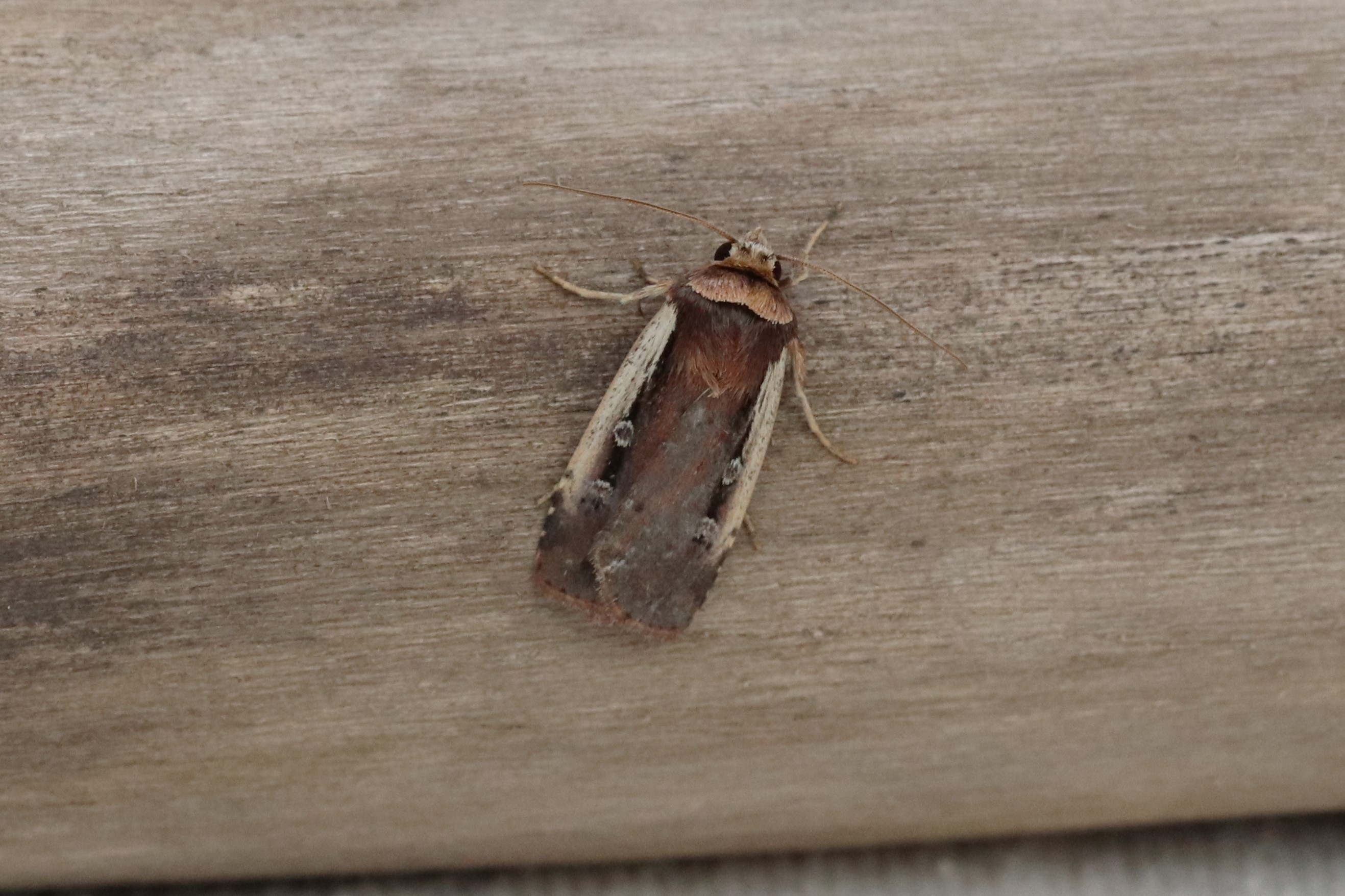
Flame-shouldered Dart

Florida Fern Moth

Frosted Tan Wave

Gem Moth

Guenee's Pearl

Harnessed Tiger Moth

Juniper Geometer Moth

Peppered Moths

A Gathering of Moths!

Sunday, September 22, 2024

 Historic Petrolia!

Sept. 21st - A day well spent in Petrolia! Guided walking tours at Petrolia Hillsdale Cemetery featured members of the town's theatre group performing heritage scenes in period costume. Re-enactments of colourful historic citizens taught about the rich Oil heritage, Oil Barons, Beekeepers, as well as the owners of a Nitroglycerine business that blew up, all of whom are buried at Hillsdale.

Henderson Conservation C.A. is adjacent to, and visible from the cemetery. This is a view I don't often see. I spent a couple of hours at the C.A. before heading to the afternoon tour.

One of the first butterflies I encountered was a Common Buckeye, hiding amongst the fallen leaves. It was difficult to locate the butterfly when the wings were closed.

I was pleased to find 4 Common Buckeye, a species that sometimes eludes me. A friend in the Brigden area said that she saw 30 individuals on Thursday!

It is hard to identify white-form Sulphurs to species. It could be either a female Clouded Sulphur or female Orange Sulphur. The legs and wing edges are bright pink.

New England Aster - popular with pollinators, but apparently not at the time I took the photo!

A Cabbage White butterfly later nectared on New England Aster. The beautiful purple, white and blue asters are an important source of food for pollinators in the fall!

Seven-spotted Lady Beetle

Margined Calligrapher

Tufted Globetail - (according to iNaturalist)

Swamp Milkweed Seeds - preparing for next spring.

Friday, September 20, 2024

 Fall Migrants!

Daylight is shortening and many birds are heading south. The following birds were all viewed in Canatara Park this week as they took a break for food and rest during migration.

Eastern Wood-Pewee: When several flycatcher species live in the same forest, the Eastern Wood-Pewee tends to forage higher in the trees than the Least and Acadian Flycatchers, but lower than the Great Crested Flycatcher.
https://www.allaboutbirds.org/guide/Eastern_Wood-Pewee/overview

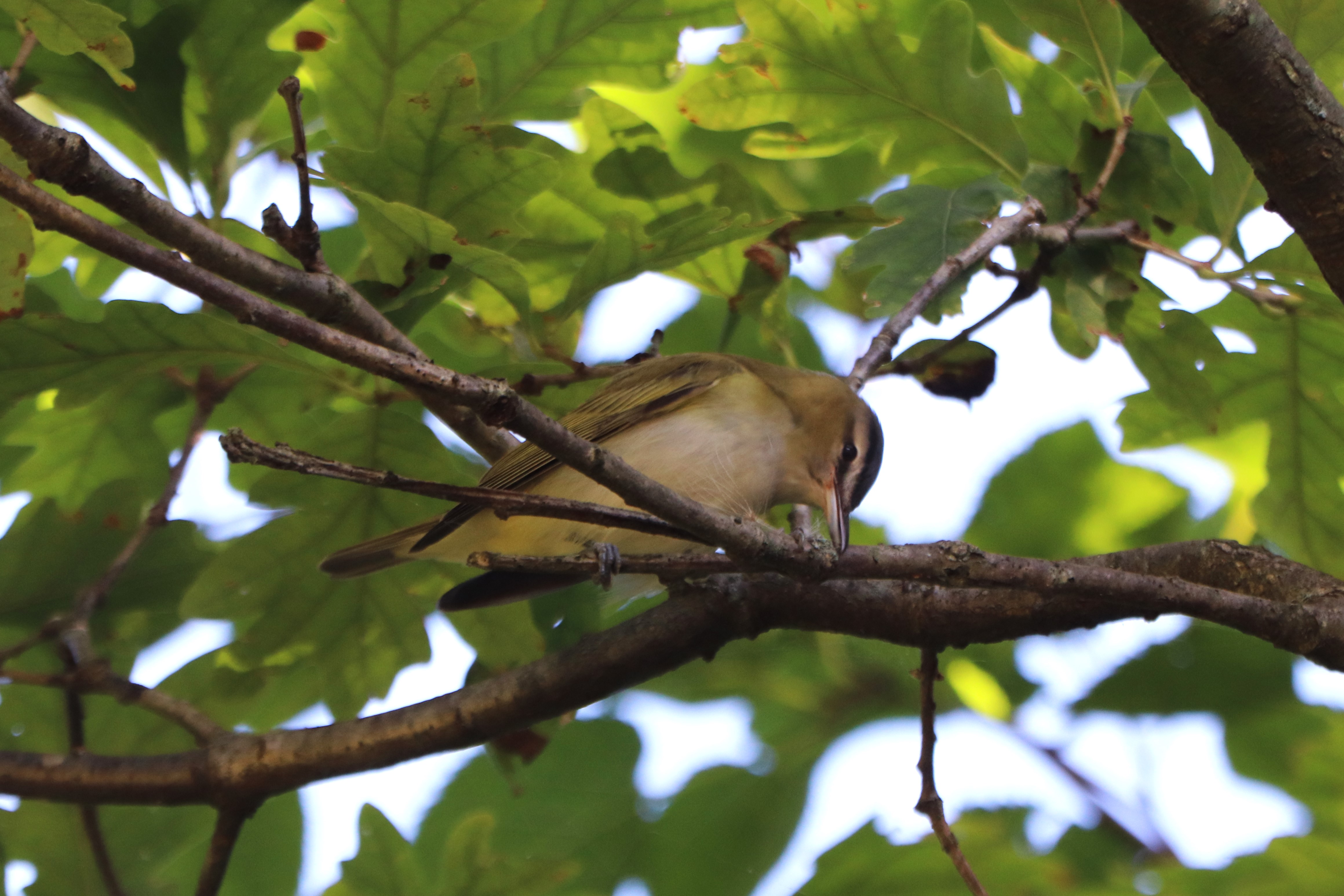
Red-eyed Vireo: They have an internal compass which guides migration. However, fat stores seem to influence migration paths when the birds reach the Gulf of Mexico. Fatter birds head across the the Gulf, while leaner birds hug the coastline or travel inland around the Gulf. Cloud cover also makes routes near land more likely.
https://www.allaboutbirds.org/guide/Red-eyed_Vireo/overview

Great Egrets

One of these things is not like the others. One morning, the Great Blue Heron had to share Lake Chipican with at least 4 Great Egrets!

Black-throated Green Warbler

Bay-breasted Warbler

Warblers are known for their quick, flighty movements. Add tree leaves to the mix and they can be tricky to photograph! The only clear shot of this Black and White Warbler that I was able to manage, was the tail end!

Nashville Warbler

Tennessee Warbler

American Redstart 

If you look closely, the American Redstart has her eye on a juicy spider, hanging on the underside of the maple leaf.

In a flash, the Redstart ate the spider for her next snack.

Wednesday, September 18, 2024

 Backyard Pollinators!

Flowers are blooming and pollinators, such as this Monarch, have been busy visiting our yard!

The Black-eyed Susan's have almost finished blooming. Dozens of Peck's Skippers have been making last ditch efforts to scoop up the nectar. (and find a mate!)

Common Eastern Bumblebee: Bumblebees are considered to be one of the most beneficial animals in nature. They pollinate flowers, fruits and vegetables including tomatoes, blueberries and cucumbers. Bumblebees have fur all over their bodies. These hairs collect and trap pollen, which the bees carry from one bloom to another.
https://www.nwf.org/Educational-Resources/Wildlife-Guide/Invertebrates/Common-Eastern-Bumblebee

Western Honey Bees: Research, led by York University, has discovered Honey Bees likely originated in Asia. The western Honey Bee then expanded into Africa and Europe, creating seven geographically separate and genetically distinct evolutionary lineages. The Western Honey Bee is used for crop pollination and honey production throughout most of the world. They have a remarkable capacity for surviving in vastly different environments from tropical rainforest, to arid environments, to temperate regions with cold winters!
https://www.yorku.ca/science/2021/12/06/where-did-western-honey-bees-come-from-new-research-finds-the-sweet-spot/

Common Aerial Yellowjackets are the most widely ranging yellow jacket species in North America. Their numbers appear to increase towards the end of the summer because the colony begins to disperse after the young have been reared. Basically, they interrupt picnics in search of sweets!
https://greennature.com/yellowjacket-pictures/

European Paper Wasps are black with prominent yellow markings and are frequently mistaken for yellowjackets. 
https://extension.psu.edu/european-paper-wasp

The Northern Paper Wasp is a social species that ranges from Southern Canada to Central North America. They like to build nests around human civilization.
https://theinsectguide.net/northern-paper-wasp/

Although not considered a pollinator, Fall Field Crickets can help with some pollen transfer as they move through gardens. They will overwinter at the egg stage.

An Eight-lined Leafhopper provided a surprising splash of colour!

Sunday, September 15, 2024

 Beach Wings!

Many different kinds of wings can be found on the Canatara Beach!
Despite the very wide beak, no sound escaped from the Ring-billed Gull's mouth. Perhaps he was practicing for the next time French fries were within reach!

Common Checkered Skippers aren't typically found on the beach! I noticed it chose a leaf on which to land, instead of standing in the sand!

Duskywings can regularly be found along the sheltered dunes trail. This Indigo Duskywing was soaking up the sun.

A Lucerne Moth warmed up on a hot stone, close to the water's edge.

I watched a few Monarchs rest on the beach after flying over Lake Huron. This individual has had a rough journey so far! It still has a long trip ahead to make it all the way to Mexico for the winter!

A Praying Mantis, frozen in place, waiting for prey to come within grabbing distance. It captured a small bee mimic while I watched.

Canada Geese taking a break along the Canatara shoreline.

More Canada Geese in migration mode!

A distant Bald Eagle was spotted "frolicking" in the shallow water at Pinery Provincial Park. It may have been trying to catch a fish, or steal from the 3 American Crows on the beach.