Sunday, July 10, 2022

 Some Fun Finds!

When I first noticed this Harvestman, it looked like the legs had been bedazzled! Upon closer inspection, the red "beads" were tiny mites. Although the mites are parasitic, they are unlikely to kill the host.

I loved the pattern on this leaf! Then I loved the name of the leaf miner who created the artwork even more! Aspen Serpentine Leaf Miner Moth! Spied at Skunks Misery during a Butterfly Count. Leaf miners are the larvae of various species of insects that live inside leaves and feed on leaf tissue. The damage looks like discoloured lines or blotches on leaves.

Spicebush Swallowtail Caterpillar: The large eye spots help to scare away potential predators.

A family of Barn Swallows "sang" for their supper whenever Mom and Dad returned with some yummy insects.

Its nesting time for American Goldfinches! They typically nest later than other species, not starting to nest until late June/early July. Exterior nest materials often include twigs and strips of bark held together by spider silk. The interior consists of rootlets and plant fibers with downy lining added to make the nest comfortable.
https://birdfact.com/articles/American-Goldfinch-nesting

The female American Goldfinch in the above 2 pictures is collecting Thistle Down to use in the interior of the nest. Her eyes were almost completely covered by the down which may have made it difficult to fly back to the nest!

Thursday, July 7, 2022

 Minerals for Butterflies!

While walking along a gravelly/dirt road today, we found and photographed many butterfly species getting nourishment by drinking minerals from the ground. We unfortunately chose a day when the road was being graded, but after each pass of the machine, the butterflies happily returned to the disturbed road! It must be easier to poke a tiny, straw-like proboscis into soft ground as opposed to hard-packed soil from vehicular traffic! 

Compton Tortoiseshell

Coral Hairstreak
 
Mourning Cloak
 
Question Mark (note the ? on the wing)

Summer Azure

Tawny Emperor

Monday, July 4, 2022

 Backyard Finds!

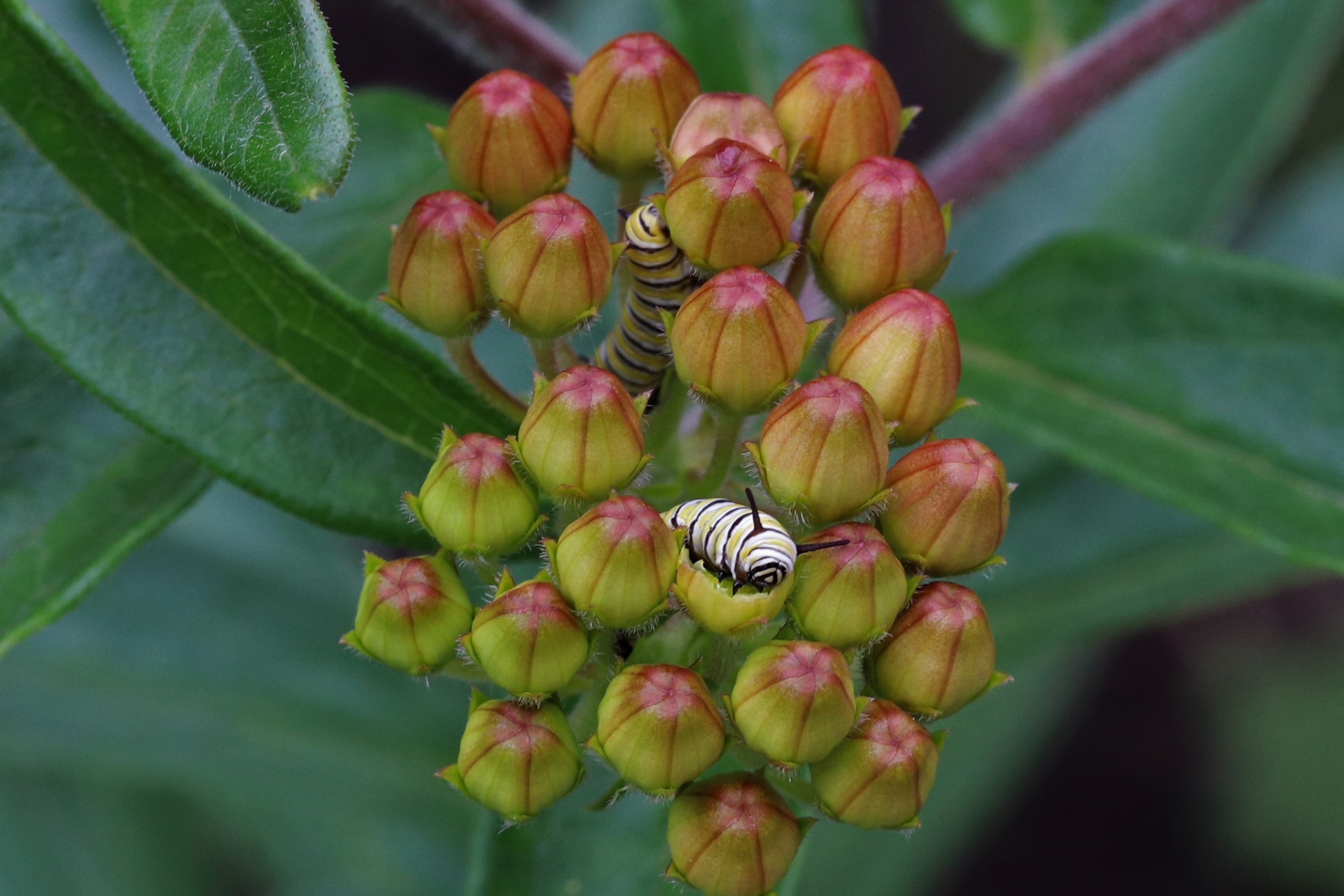
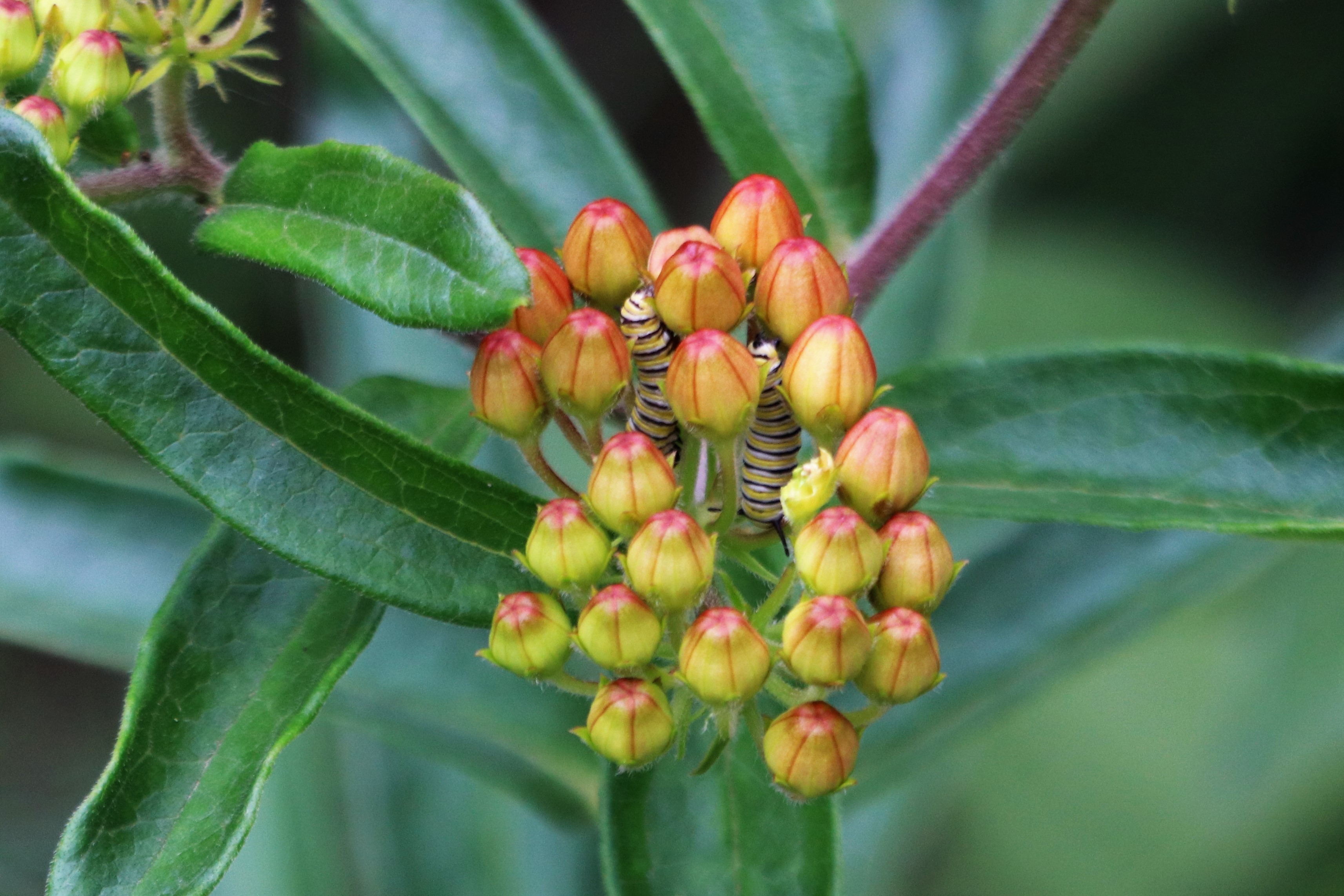
I've been busy planting native species which attracts native butterflies and other pollinators. Five Monarch Butterfly caterpillars have been hanging out on some orange Butterflyweed.

An American Lady rested on the Pussy Toes and Pearly Everlasting in our native garden. The butterfly will lay eggs on both of these plant species.

A Common Picture-winged Fly made an appearance. The larva of this species prefers dead and decaying organic material. It has a remarkably large snout that makes the face look like an old-style gas mask!
https://mdc.mo.gov/discover-nature/field-guide/picture-winged-flies

The round circles in the leaves of my Sugar Maple Tree is evidence of Leafcutter bees. I need to keep an eye out for little bees "flying around on green magic carpets" again this year!

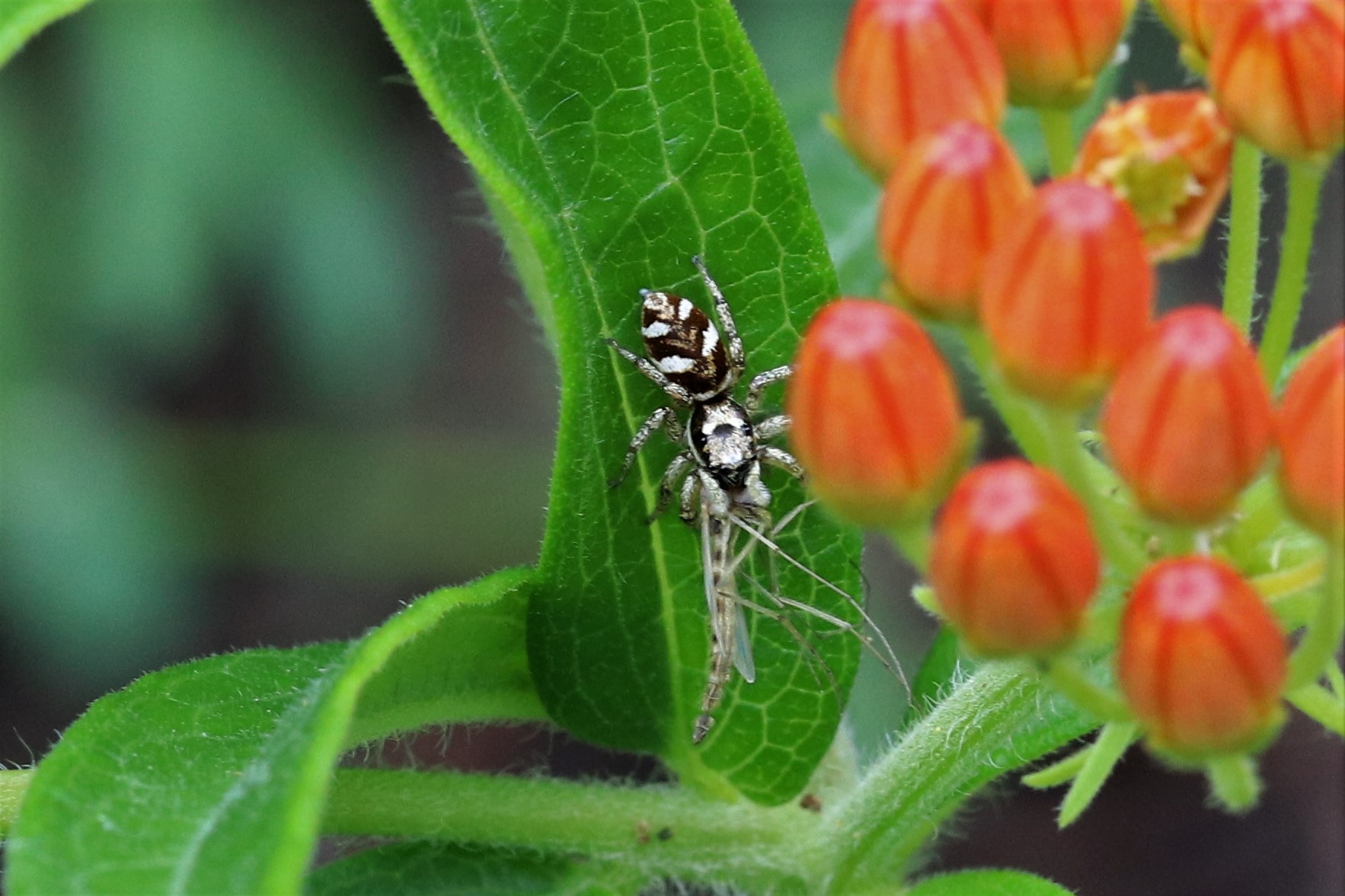
A jumping spider found a snack while hiding in the butterfly weed!.

Saturday, July 2, 2022

 Timberdoodles!

I had the very good fortune of observing a family of 4 Woodcocks on the forest floor. Males play no role in selecting a nest site, incubating eggs, or rearing young so I assume I had found a Mom with her 3 young. Cornell Lab, All About Birds  I believe the 3 youngsters are in the above photo. 

Because of where it lives, its oddball looks, and its various behaviors, the American Woodcock has earned a host of folk names including Timberdoodle, Night Partridge and Bogsucker. The most commonly used name, Woodcock, reflects the bird's preference for wooded areas. https://timberdoodle.org/biology

American Woodcocks spend most of their time hidden in fields and on the forest floor where they probe for earthworms and other invertebrates. They are plump, short-legged shorebirds with very long, straight bills. Cornell Lab, All About Birds 

Look carefully at the beak in the photo. Woodcocks are able to open the foremost third of their upper bill, while the bill is sunk into the ground! This helps them to grab worms and pull them from their burrows. Their long tongue and rough lower bill help in securing slippery prey! They will also eat ants, flies, beetles, crickets, grasshoppers, millipedes, centipedes and spiders! https://timberdoodle.org/biology

Their large eyes are positioned high and near the back of their skull. This arrangement lets them keep watch for danger in the sky while they have their heads down probing in the soil for food. Cornell Lab, All About Birds 

Look for American Woodcock in forests, forest edges, old fields, and wet meadows of eastern North America. Cornell Lab, All About Birds 

Thursday, June 30, 2022

Moths and a Dragonfly:

On June 28th, we hiked trails alongside the Ausable River where we found some cool moths and a very large dragonfly!

There are wild variations within the species of the Leconte's Haploa Moth. Both individuals above are the same species! All Leconte's Haploa Moths have an orange head with black eyes. There is an upside down 'Y' on the back. Legs are dark on one side and light on the other, like arms that get an uneven tan in the summer.  https://www.insectidentification.org/insect-description.php?identification=Lecontes-Haploa-Moth

Adult Beggar Moths are active from late spring through early autumn. The yellow wings appear translucent, letting light through. They are attracted to lights at night.  https://www.insectidentification.org/insect-description.php?identification=The-Beggar-Moth
Despite its name, the caterpillar of the Crocus Geometer Moth feeds on a diverse group of trees and shrubs including cherry, elm, maple, and basswood. It also enjoys rose, viburnum, blueberry and currant shrubs. https://www.insectidentification.org/insect-description.php?identification=Crocus-Geometer-Moth

The male Delicate Cycnia Moth has the ability to make a clicking sound! This skill is unusual for moths and is used to attract females. The clicking sound also confuses predatory bats as to their location. https://www.insectidentification.org/insect-description.php?identification=Delicate-Cycnia-Moth

Lucky for us, a Swift River Cruiser stopped for a break right beside me, giving us a chance to identify it. They can most often be seen "cruising" very fast along the shore for long stretches before turning back. This is a large dragonfly reaching lengths up to 76 mm. Field Guide to Dragonflies and Damselflies of Algonquin Provincial Park and Surrounding Area, Colin D. Jones et al.

Tuesday, June 28, 2022

 Baltimore Checkerspots!!

One of my favourite butterflies is the Baltimore Checkerspot. We found a minimum of 7 of these beauties at the Dow Wetlands recently. They inhabit wet meadows, bogs and marshes.

Upperwing of the Baltimore Checkerspot: Adults drink nectar from the flowers of Milkweed, Viburnum and Wild rose.

A mated pair in the grasses: Males perch near the ground to find females. Eggs are laid in groups of 100-700 under host plant leaves.  https://www.butterfliesandmoths.org/species/Euphydryas-phaeton

Shortly after finding the mated pair, an interloper appeared who made 2 unsuccessful attempts at causing interference!

I think the interloper on the right wanted to start a fist fight!

Even the tips of the antennae seem to light up! Plants where eggs are laid include Turtlehead, Hairy Beardtongue, English plantain and False foxglove. The young overwinter at the larval stage. 
https://www.butterfliesandmoths.org/species/Euphydryas-phaeton

Sunday, June 26, 2022

6-Legged Beauties!

I had to look at this Hologram Moth from a few different angles before convincing myself that it was a moth and not a dead leaf!  Having found this "lifer" I now need to look at dead leaves more closely when on my insect adventures! The large patch on its back is iridescent and can shine from green to bronze depending upon the angle of light.   https://seabrookeleckie.com/2011/07/25/hologram-moth/

The Common Spring Moth is one of the earliest spring moths. Although it is considered to be common, it was another "lifer" for me! It is active during the months of March, April, and May, and sometimes into June in Southern Ontario.  https://www.insectidentification.org/insect-description.php?identification=Common-Spring-Moth

I've been watching for Dogwood Leaf Beetles, and was happy to finally find one today. It is a member of the Calligrapha family and looks like a Calligrapher has drawn on its back!

Although this Common Stretch Spider has 8 legs, I included it because it was hiding behind the Dogwood Leaf Beetle. I wonder if either was aware of the others' presence?? 

The Grape Plume Moth is more often found on wild grapes than on cultivated varieties. It overwinters in the pupal stage and the adult moths emerge during the spring.  http://www.ladybug.uconn.edu/FactSheets/grape-plume-moth.php

Adult Yellow-horned Flower Longhorn Beetles have antennae that are as long or longer than the body. 
 
Sunrise over Lake Huron, 5:10 a.m. June 23rd.