Tuesday, October 22, 2024

 Meadowlily Woods, London!

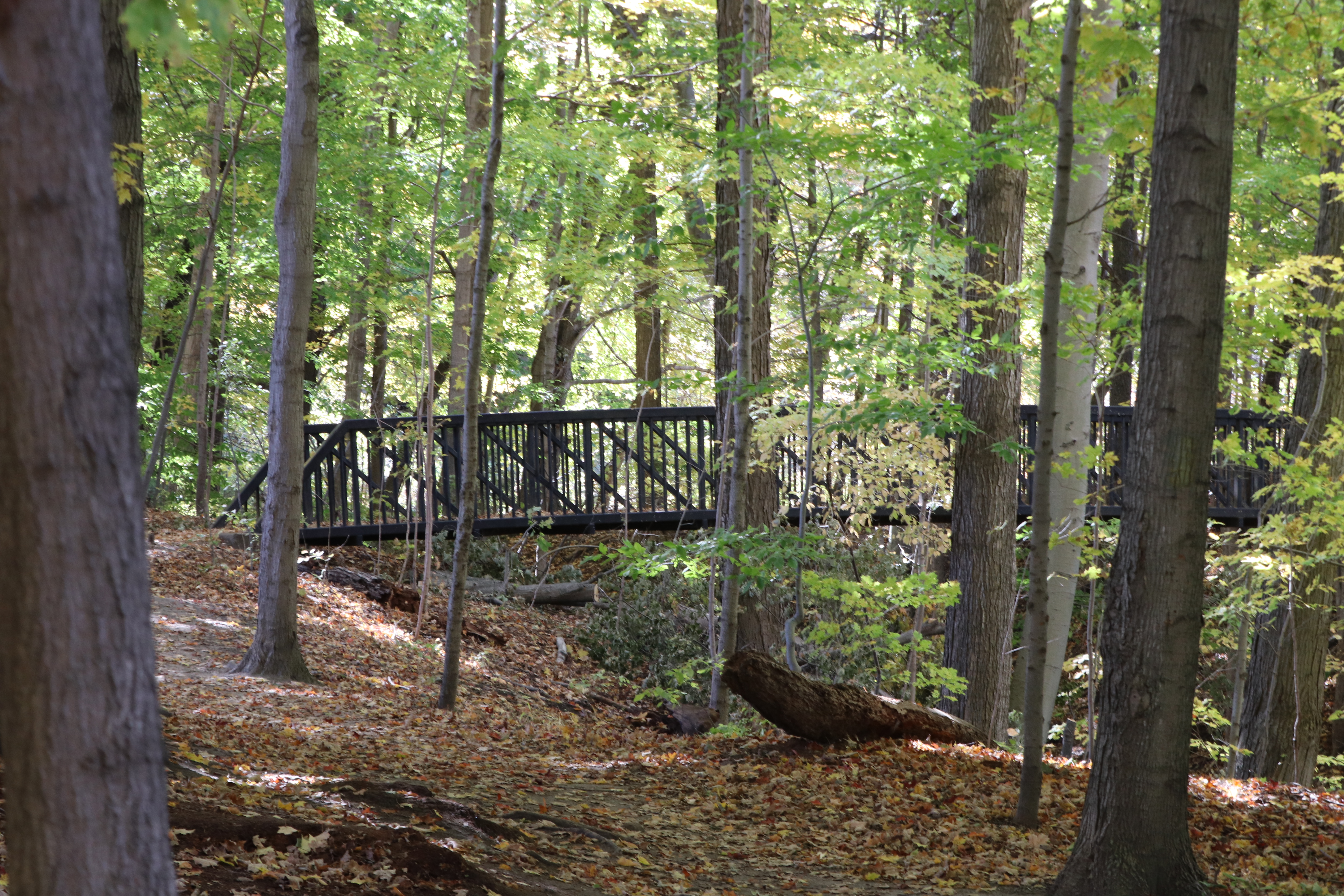
Meadowlily Woods Environmentally Significant Area (ESA) is situated on the south side of the South Thames River. The ESA contains a floodplain, woods, deep ravines, mature woodlands and some active and retired agricultural fields that are now meadows.
https://meadowlilywoods.com/

We had a pleasant walk along the Thames River on October 17th. We were often elevated well above the water on beautiful tree lined trails but still had opportunities for good views of the water. Canada Geese were quietly (and distantly) resting on the water.

Although many birds could be heard, few were within photographic range. This pair of Mallards were the first birds I saw.
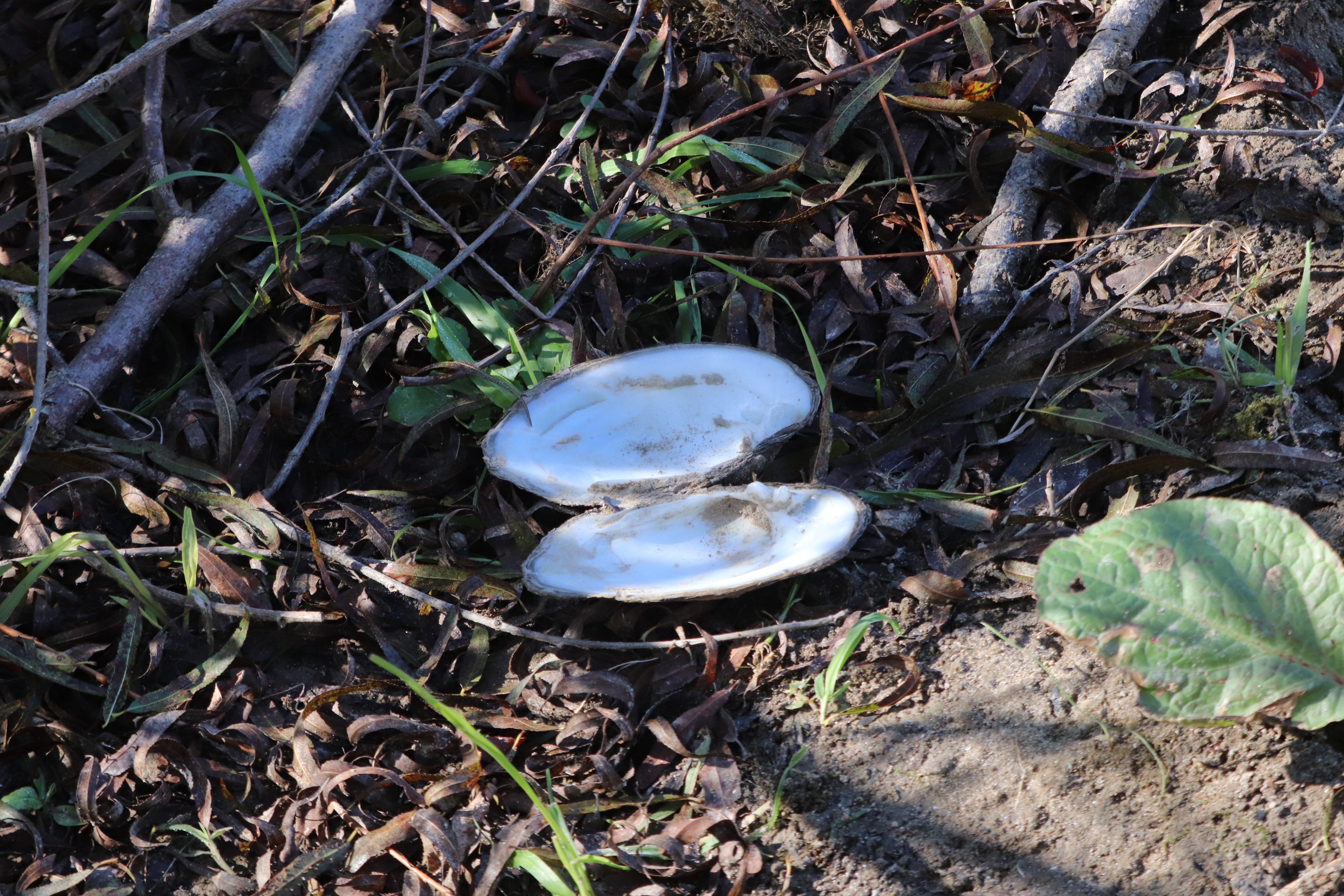
An unidentified mussel.

Close to the mussels were lots of raccoon tracks visible in the mud. Mussels are a favourite food of raccoons.

We heard the call of this female Red-bellied Woodpecker long before setting our eyes on her.

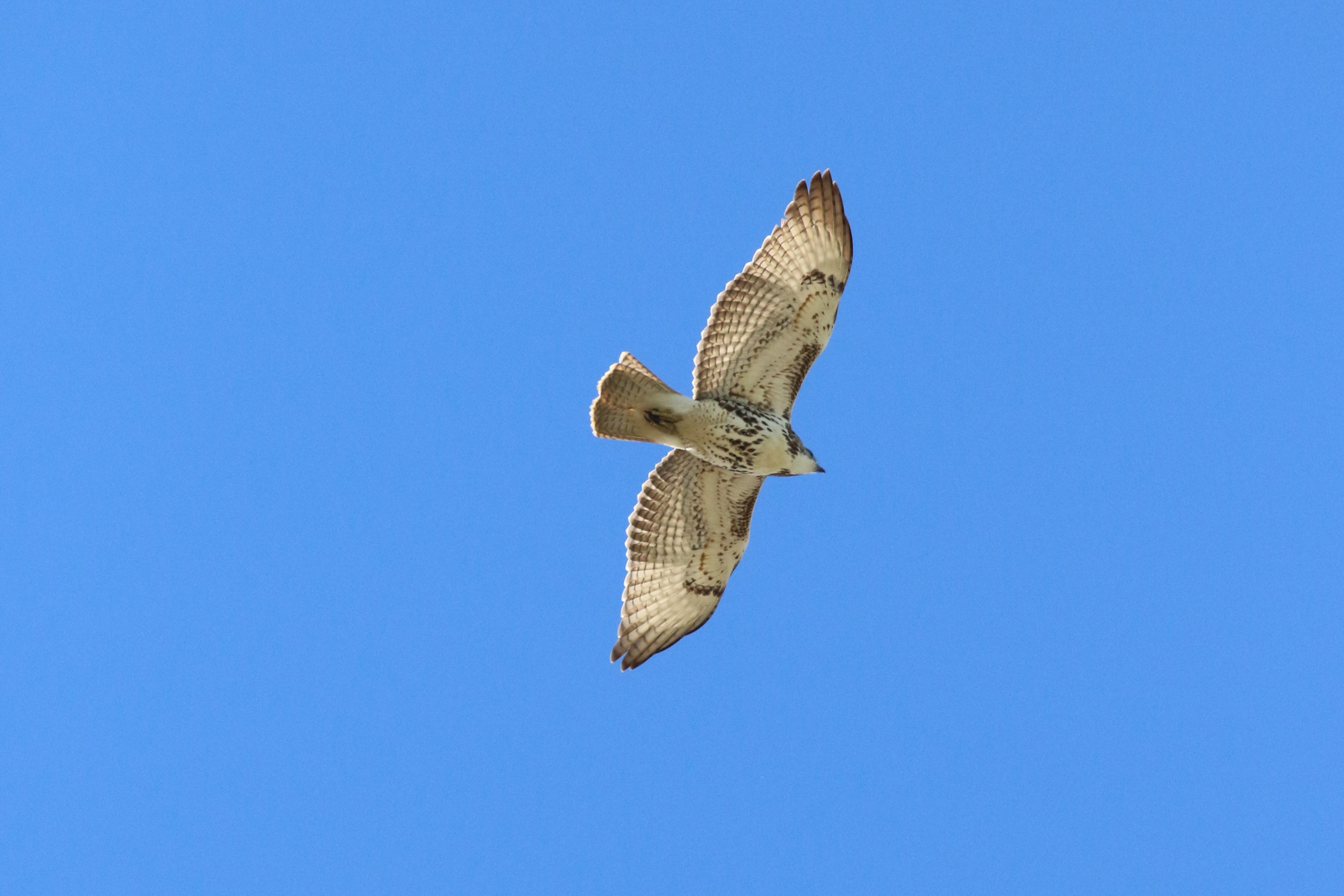
Red-tailed Hawk soaring overhead.

Wildlife Tree

Across the road from Meadowlily Woods, was Meadowlily Nature Preserve, protected by the Thames Talbot Nature Trust.

Foot bridges made it easy to navigate over the gullies. This area has good potential for spring and fall migrants. It would be much easier to see bird life in the spring before the leaves opened up on the trees!

Sunday, October 20, 2024

 More October Yard Birds!

It didn't take long for Blue Jays to learn that we started stocking our bird feeder for the fall/winter season. Before I even had a chance to get back into the house, a Jay was alerting other birds that sunflower seeds were ready for the taking!
The black bridle across the face, nape and throat varies extensively and may help Blue Jays recognize one another!
https://www.allaboutbirds.org/guide/Blue_Jay/overview

In a matter of only minutes, 9 species of birds were spotted in our yard. White-crowned Sparrows continue to visit the feeding station.

White-breasted Nuthatches are regulars during the winter, but this is the first one I have seen in the yard in a few months. They forage up, down, and sideway over tree trunks and around large branches probing into bark crevices to find food.
https://www.allaboutbirds.org/guide/White-breasted_Nuthatch/lifehistory

The ever adorable Black-capped chickadees were quick to heed the call of food! Every autumn, Black-capped Chickadees allow brain neurons containing old information to die, replacing them with new neurons so they can adapt to changes in their social flocks and environment, even with their tiny brains!
https://www.allaboutbirds.org/guide/Black-capped_Chickadee/overview

Mourning Doves tend to feed busily on the ground, swallowing seeds and storing them in an enlargement of the esophagus, called the crop. Once they've filled it, they can fly to a safe perch to digest the meal. 
https://www.allaboutbirds.org/guide/Mourning_Dove/overview

A Red-breasted Nuthatch searched for insects high in our neighbour's Tamarack tree. I struggle to differentiate between the sound of the Red-breasted and White-breasted Nuthatches. A description about the Red-breasted Nuthatch states: "Their excitable yank-yank call sounds like tiny tin horns being honked in the tree tops." I shall listen for tiny tin horns the next time I hear Nuthatches nearby!
https://www.allaboutbirds.org/guide/Red-breasted_Nuthatch/overview

The white "spectacles" on the Blue-headed Vireo helped to distinguish it from other vireos. This species does not visit birdfeeders. It hunts for insects and larva along tree branches.

Friday, October 18, 2024

 This and That in Canatara!

A Brown Creeper is taking a quick break from grabbing bugs that were hiding under the tree bark. (Notice the hooked beak which assists with extracting the bugs.)

A chilly Bumblebee early in the morning: It may have spent the night on that flower as there was a cool start to the day, and the bumblebee wasn't moving!

Great Blue Heron at a favourite lookout point!

An irritated (the feathers on the crown are raised) Golden-crowned Kinglet.

Praying Mantis doing his best "stick" imitation!

Red-eared Slider basking on October 14th.

Ring-billed Gull soaring over the Lake Huron Waves, Fort Gratiot, Michigan Lighthouse in background.

A first for me - Squirrel on a groyne!

Wednesday, October 16, 2024

 Petrolia Things!

While walking along one of the weirs at Henderson Conservation Area, I noticed the tiniest Wooly Bear Caterpillar that I have ever seen! I took off my ring to provide some size perspective before it crawled away.

Many turtles sunbathed on a fallen log in the water at the Conservation Area. Half appeared to be Painted Turtles, while the other half were Red-eared Sliders.

A Question Mark butterfly, does its best "leaf" imitation as it sits with closed wings on top of a Staghorn Sumac leaf stem. Looking closely at the underwing, the basic shape of a white question mark is visible.

Autumn Meadowhawk

Fall Colours along the trails.


My next stop was in the town of Petrolia for the annual Arbour Week Tree planting. Each year the committee chooses a location in Lambton County to plant a few trees. The YMCA in Petrolia was this year's recipient. The clay packed soil and lack of recent rain made for some very challenging digging conditions! Notice the feet on the right, as they are standing on the shovel.

The smaller native trees just planted, are dwarfed by some other trees. Together, the little patch of tree life will provide shelter and food for future "things with wings"!

Sunday, October 13, 2024

 October Yard Birds!

On the first day of October, a female Ruby-throated Hummingbird visited our backyard. They prefer to feed on red or orange flowers. Cana Lilies are one of the very few non native flowers in our garden.... and the only red flowers blooming this late in the year. Ruby-throated Hummingbirds are eastern North America's only breeding hummingbird, breeding east of the Rockies. In terms of area, this species occupies the largest breeding range of any North American Hummingbird.
https://www.allaboutbirds.org/guide/Ruby-throated_Hummingbird/overview

Her tongue is visible in the above photo.

Although it can climb up tree trunks and hammer on wood like other woodpeckers, the Northern Flicker prefers to find food on the ground. Ants are it's main food, and the flicker digs in the dirt to find them. It uses its long barbed tongue to lap up the ants. It had some success digging into the dirt between the patio stones this afternoon.
https://www.allaboutbirds.org/guide/Northern_Flicker/overview

Video: Northern Flicker hunting for ants.

Another ground feeder is the Dark-eyed Junco. The majority of Juncos in Ontario breed north of Georgian Bay. We don't see them in the summer in SW Ontario, but they are now showing up for their winter visit.

White-crowned Sparrows nest in the Hudson Bay region. They are currently migrating to their winter homes and will be seen again next spring when they head north to breed. Occasionally, a few can be found at bird feeders in the winter.
https://www.allaboutbirds.org/guide/White-crowned_Sparrow/maps-range

White-throated Sparrows readily visit feeders or peck at fallen seeds beneath them. A brush pile in the yard can provide a place for them to take cover between trips to the feeder.
https://www.allaboutbirds.org/guide/White-throated_Sparrow/overview

Friday, October 11, 2024

 Canatara Life in October!

A well camouflaged Great Blue Heron overlooking Lake Chipican: Despite their impressive size, Great Blue Herons weigh only 5 to 6 pounds thanks in part to their hollow bones, a feature almost all birds share.
https://www.allaboutbirds.org/guide/Great_Blue_Heron/overview

A few weeks earlier, 6 Great Blue Herons were lined up in the distance.

A Green Heron has been recently hunting in the water near the animal farm. Green Herons stand motionless at the water's edge as they hunt for fish and amphibians. They usually stand on vegetation or solid ground, and don't wade as often as larger herons.
https://www.allaboutbirds.org/guide/Green_Heron/id

Yellow-rumped Warbler, taking a break from migration: I believe it had a very stiff caterpillar in its beak. The warbler ate whatever it was holding.

I watched this Praying Mantis fly along the path for several metres, then land just off the trail. I found it amusing to watch it's awkward flight. Adults will not survive the winter, so eggs must be laid before the arrival of cold weather.

Something caused a traffic jam on Lake Huron.

Lady Bugs or Lady Beetles will hibernate under rocks and logs during the winter months. It seems a bit odd to see them on wind swept Canatara beach, but every fall, it is a popular gathering point!

Common Buckeye continue to show up on the sunny days!

Bald Eagle, probable first year bird: Juveniles have broader wings and longer tails than adults. The orange feathers visible on the underside are a sign of the colour transition taking place as the bird ages.

A Red-tailed Hawk soared over the meadow.