Friday, June 28, 2024

 A Busy 2 Days at Pinery P.P.

It was a busy weekend with the Pinery Butterfly Count on Saturday and a Bumblebee Workshop on Sunday!

Butterfly numbers were low inside the park, but counters outside of the park within the 15 mile diameter circle had some good success. 30 species were identified with a total of 434 individual butterflies by 15 counters. Above, a Hackberry Emperor took a rest on a sign.

While walking along the mostly shaded Wilderness Trail, a faded Hobomok Skipper was one of only 4 individual butterflies that we saw. Very few flowers were blooming.

Common Whitetail - another non butterfly

We walked the Riverside Trail after lunch, hoping there would be more butterflies with the warmer afternoon temperatures. We didn't see many butterflies, but saw 7 Orange-tipped Oakworm Moths gathering together, including a mated pair. A female in the crowd must have emitted some strong pheromones to attract so many males!

Violet Dancer on the boardwalk railing.

This was my second encounter with an Eastern Milksnake at the Pinery this year! Their name comes from the false belief that they take milk from cows in barns. They cannot drink milk but are attracted to barns by the abundance of mice. They are semi-constrictors: After seizing prey in the mouth, they coil around the prey until it has suffocated. Predators include raccoons, skunks, foxes and coyotes.
https://ontarionature.org/programs/community-science/reptile-amphibian-atlas/milksnake/
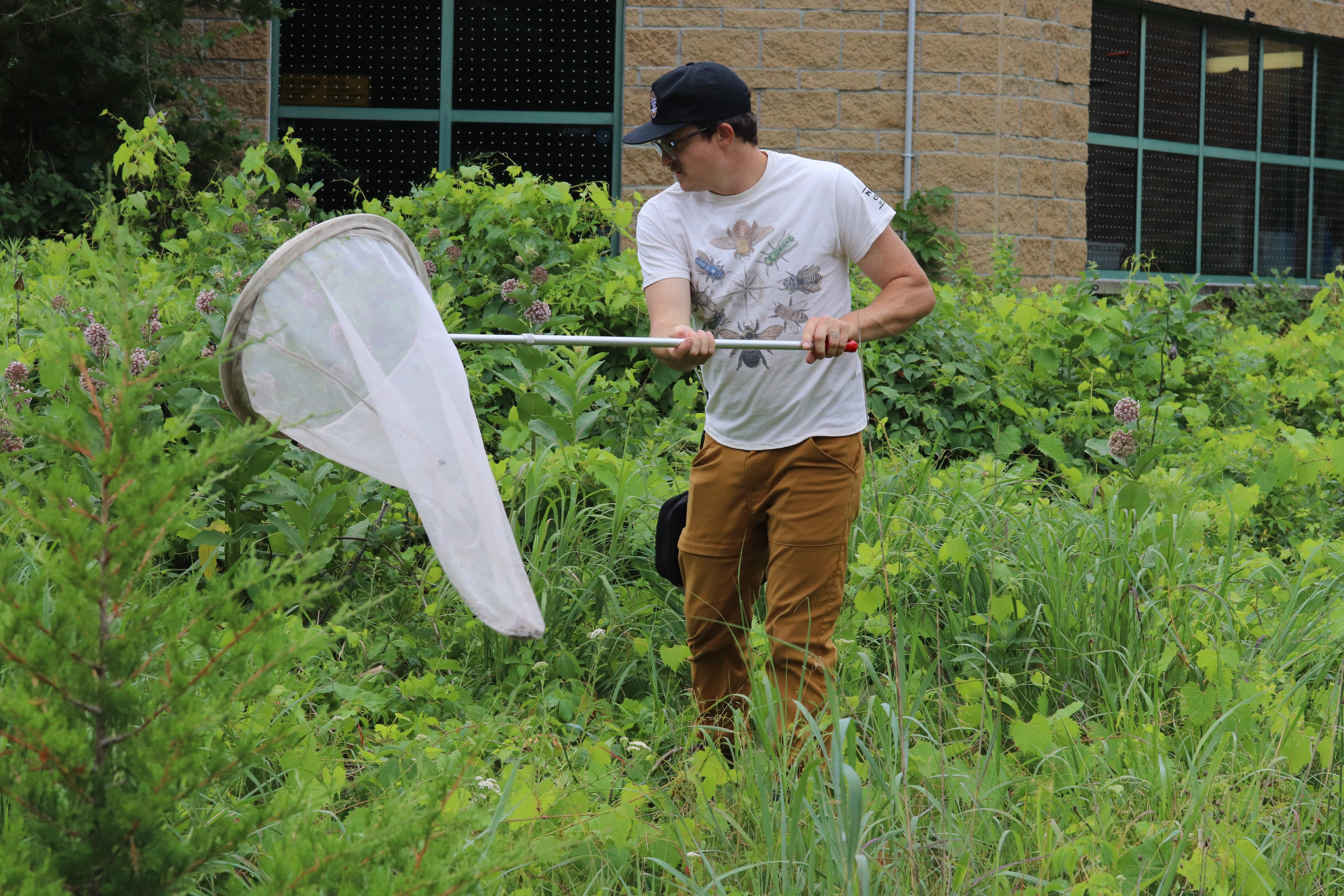
On Sunday, following an indoor training session, we headed outside to practice our Bumblebee catching skills. I participated in the program last year but the session was a good review.

Mike managed to collect 8 Bumblebees in his net and had to carefully extract each individual without getting stung! The rest of us caught one bumblebee at a time!

A Two-spotted Bumblebee that I captured on some Common Milkweed. (The "2 spots" giving this bumblebee it's name are not visible in the photo.)

The Bumblebees were kept for a short time in the containers so participants could confirm identification of each species. During the summer study collection, the containers will be put into cooler packs. It is then easier to photograph the bumblebees at different angles before they warm up and fly away.

Wednesday, June 26, 2024

 Last of the Best!

A few more pictures from our trip to Peterborough and Kawartha Counties.

Bronze Copper - Carden Alvar

I watched a Black-capped Chickadee as it carried food, entered a cavity at the top of the stump then flew away with a fecal sac from one of the baby chickadees in the nest!.

Eastern Phantom Crane Fly: The black and white colouring of these creatures allow them to appear and disappear as they "float" between shadows and sunlight. I was lucky to have one stop in photographic range!!

Bee-mimic Beetle - Bee mimics do not sting. Striping on their bodies alerts predators to the possibility of a stinging insect so they are often left in peace.

Dreamy Duskywing - well camouflaged!

Two-spotted Skipper - another lifer!

Unidentified caterpillar, probably in the Tiger Moth family!

Fence line and field of flowers!

Beyond this fence but too far for the camera, we could see a young Loggerhead Shrike in a tree!

Sunday, June 23, 2024

 Flying around Peterborough County:

A Mayfly took a break on the Trans-Canada Trail!
Beaver Mead Park, Peterborough.

Modest Flat-headed Mayfly

Trent University Wildlife Sanctuary Nature Area: The property offers several kilometers of walking trails along varied terrain and habitat. When we first spied this Spring Fishfly, we thought it was a moth because of the feathered antennae. It blended in well with its surroundings!

Heading into a dark treed tunnel at the Wildlife Sanctuary.

This striped insect appears to be a Zebra Caddisfly. We saw it at a lunch stop resting on a pine tree.

Hundreds of aerial Zebra Caddisflies, not resting!

Toothed Somberwing

Two-banded Petrophila, only 1 cm in length

A Wolf Spider Momma with a whole crew of babies on her back!!

Scenic Waterfall!

Friday, June 21, 2024

 Wings along a Gravel Road!

A 10 km gravel road NE of Peterborough was recommended to us for butterflies. A grader was working on the road that day, but we still managed to find several species of butterflies including some lifers. Above, a White Admiral, landed on the edge of the disturbed road for nutrients and salt.

I don't recall ever seeing a butterfly land on a lily pad, but it was the chosen rest stop for an Eyed Brown!

Silver-bordered Fritillary on Orange Hawkweed - a Lifer!

Arctic Skipper - another lifer!

Clearwing Moth, enjoying the Orange Hawkweed. INaturalist identified it through AI as a Diervilla Clearwing Moth, but I haven't been able to confirm the species name.

Indian Skipper, another species not typically found in SW Ontario.

Calico Pennant, female. When looking straight down at the abdomen, several heart-shaped spots are clearly visible.

North America's smallest dragonfly is the Elfin Skimmer. This black and yellow individual, somewhat resembling a wasp, is a female.
https://www.inaturalist.org/taxa/106516-Nannothemis-bella

The Canadian Tiger Swallowtail is found in the Canadian Shield. It has a wider black stripe along the inner margin of the hind wings than the Easter Tiger Swallowtail which is found in the Carolinian zone in southern Ontario. 
The ROM Field Guide to butterflies of Ontario, Peter Hall et. al 2014.

In addition to probing along gravel roads, animal excrement is another excellent source for salts and nutrients. At our lunch stop, we parked right next to some "fresh-ish" bear scat being enjoyed by 3 Northern Crescents and a Harris's Checkerspot (on the right). An odour was still lingering!

Lunch was not spent beside the bear scat, but off the road by this beautiful meadow!

Tuesday, June 18, 2024

 Carden Alvar Birds!

June 13th was spent at the Carden Alvar. The property became a Provincial Park in 2014. An Alvar is characterized by thin soils and sparse vegetation on top of limestone bedrock, with poor drainage. It is a harsh environment that supports provincially and nationally rare species. 
https://www.ontarioparks.ca/parksblog/carden-alvar-provincial-park-and-iba/

Although we didn't see any Sandhill Cranes on the property, 32 flew overhead as we traveled to Carden Alvar Provincial Park.
A highlight of the day was finding a family of Virginia Rails with a total of 5 chicks! We could hear the loud clucks of a Rail but were not able to see it through the dense vegetation, despite the sound being only a few feet away.
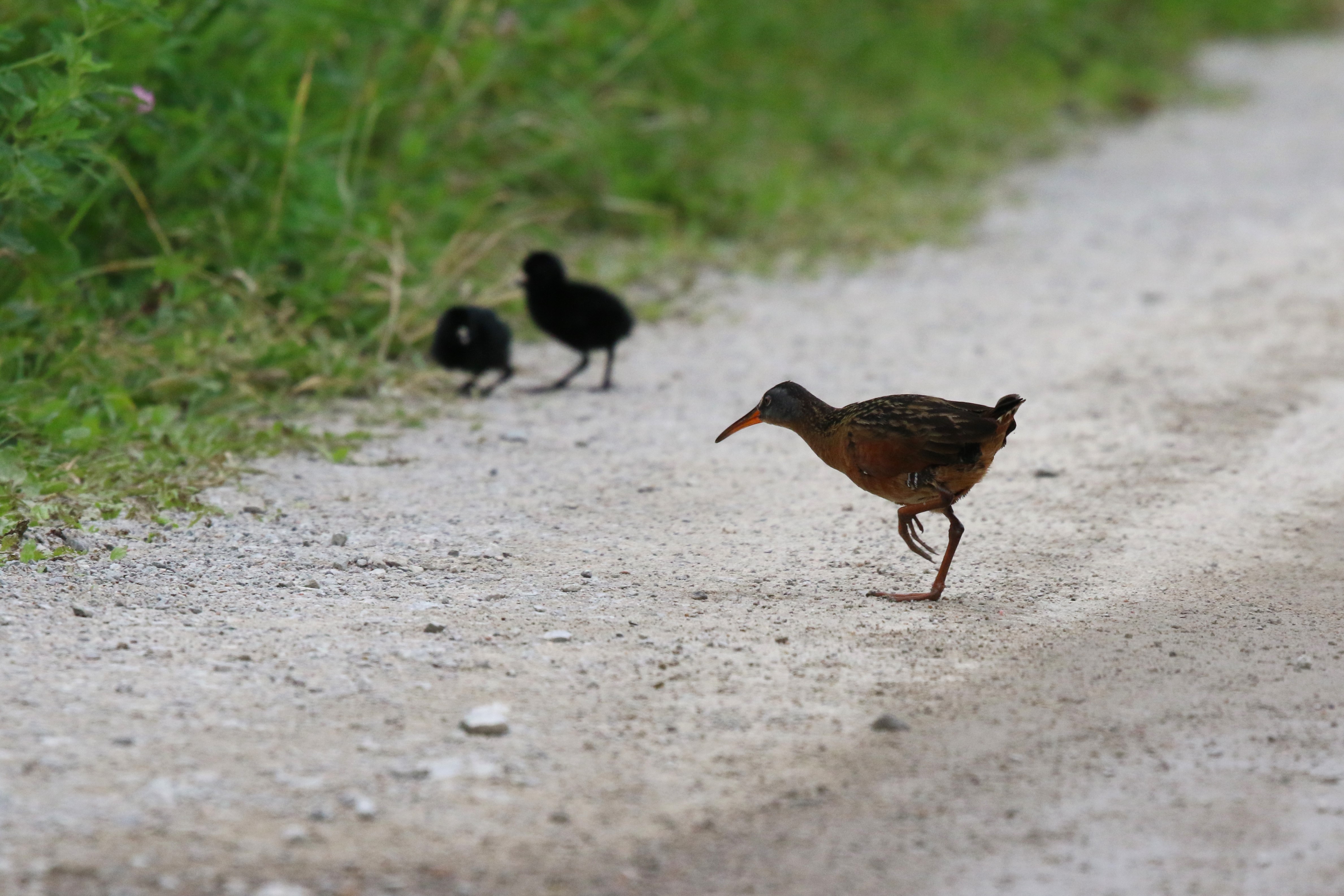
We continued walking along the interior road until we arrived at a flooded area then turned around, walking just beyond where we had heard the Rail. After stopping to scan the wetland, we watched 7 Virginia Rails run across the road! 

The chicks crossed the road one at a time. The long toes are already visible on this youngster. When they hatch, they are covered in black down and their eyes are open. Rails have strong legs and long toes that help them walk and run on floating mats of vegetation. Food includes beetles, snails, spiders, flies, small fish, slugs, crayfish and even frogs. They spend more time walking than flying and have forehead feathers adapted to withstand wear and tear from pushing through dense marsh vegetation.
https://www.allaboutbirds.org/guide/Virginia_Rail/overview

Upland Sandpiper on a wire! Unlike most other North American shorebirds, Upland Sandpipers avoid wetlands, instead hunting grasshoppers and other insects in grasslands and pasture with jerky steps and quick jabs at prey. Male Upland Sandpipers often perch on fence posts early in the breeding season.
https://www.allaboutbirds.org/guide/Upland_Sandpiper/overview

Wilson's Snipe can be tough to see thanks partly to their secretive nature. But in the summer they often stand on fence posts or take to the sky with a fast, zigzagging flight and "winnowing" sound that is made with the tail. 
https://www.allaboutbirds.org/guide/Wilsons_Snipe/overview

Their winnowing sound often caused us to look skyward. Sometimes were lucky to see the aerial flight of the Wilson's Snipe!

Tree Swallow checking out the fence line.

A Great Blue Heron flew in from a distance and landed at the tip top of a Spruce Tree. It was still perched in the lofty location 10 minutes later.